Alberta Farm and Farmland Real Estate: A Complete Buyer's and Seller's Guide
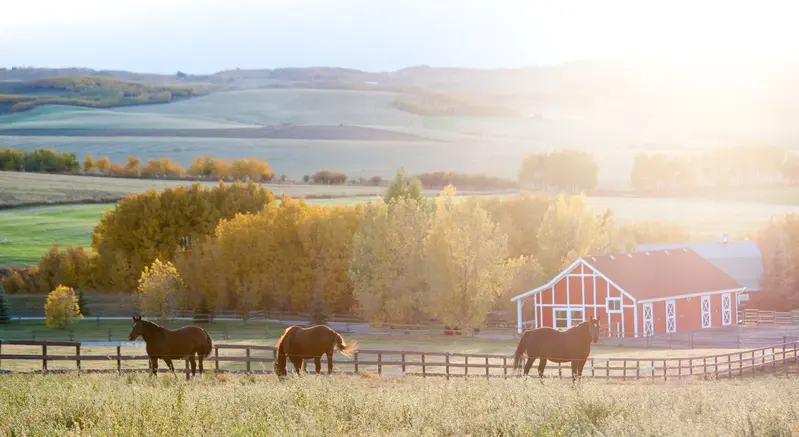
What Makes Alberta Farmland Real Estate a Strong Investment Right Now
Alberta farmland continues to outperform most other asset classes because supply is structurally limited, demand from both producers and lifestyle buyers remains strong, and long-term conviction in Canadian agriculture has not wavered.
The FCC's 2025 report attributes the sustained climb to three converging forces: tightly held land inventory, moderating borrowing costs compared to the 2022–2023 peak, and strong livestock prices supporting cattle-focused operations. Even with softer crop revenues in some sectors, cultivated land values still climbed more than 10% nationally, a testament to buyers' long-term confidence in agricultural land as a foundational, inflation-hedging asset.
In the five communities McMillan Real Estate Group serves (Cochrane, Canmore, Airdrie, Water Valley, and Mountain View County), farm and farmland properties draw a particularly diverse pool of buyers:
- Investors seeking tangible, appreciating assets with inflation-hedging qualities
- Relocators from Calgary and other urban centres who want acreage living within commuting distance
- Working farmers looking to expand cattle or mixed-farming operations
- Lifestyle buyers drawn to equestrian properties, hobby farms, and off-grid retreats
Each property type carries distinct due-diligence requirements and pricing dynamics, which we cover below.
Alberta Farm and Farmland Property Types: Know What You're Buying
Cultivated Cropland produces grains and oilseeds, particularly canola and spring wheat, Alberta's two dominant field crops. According to Statistics Canada's November 2024 principal field crops report, Alberta wheat production reached 9.9 million tonnes in 2024, up 6.4% year-over-year, reflecting the province's enduring agricultural strength. In Mountain View County, cultivated parcels typically run 160 to 640+ acres. Soil quality, drainage, and irrigation access are critical valuation factors; irrigated Alberta land appreciated 11.3% in 2025, the sharpest gain of any land category nationally.
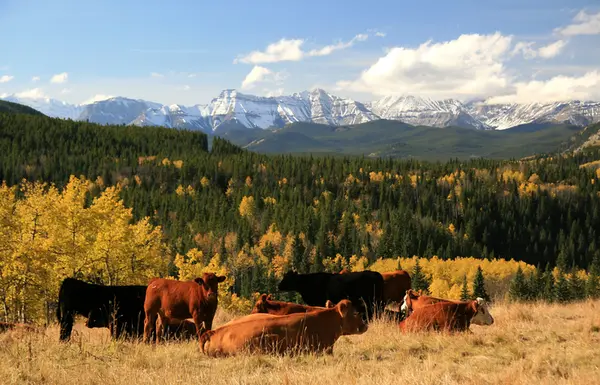
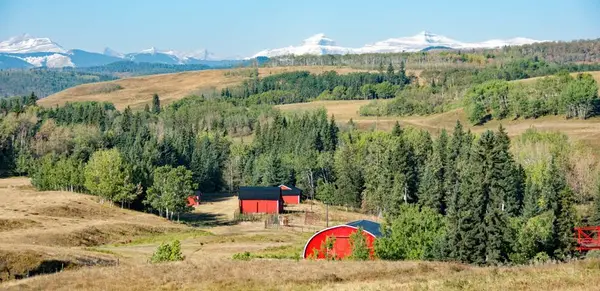
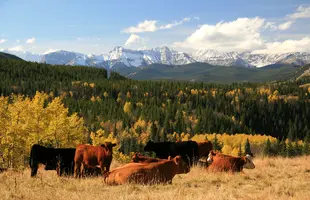
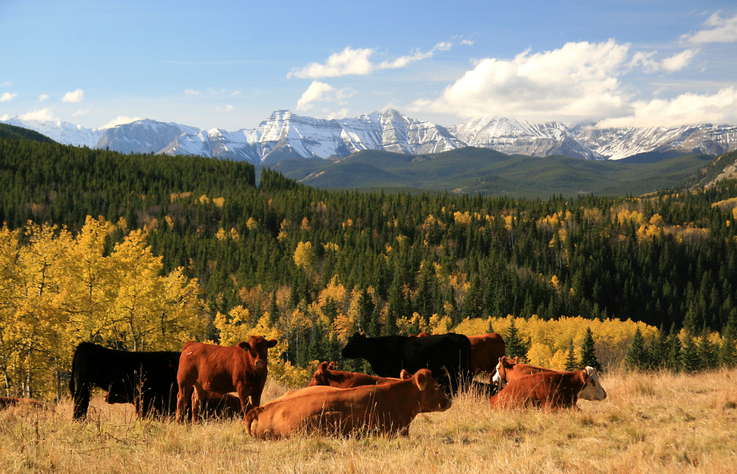
Cattle Ranches and Pastureland dominate the foothills corridor around Cochrane and Water Valley. Alberta's pastureland values rose 3.5% in 2025, reflecting producers' current focus on herd rebuilding rather than land expansion. Foothills ranch parcels typically include native grass grazing, dugout or creek access, hay production, and corrals.
Hobby Farms and Lifestyle Acreages are the most accessible entry point, typically 5–40 acres with a residence. Near Airdrie and Cochrane, these listings generally start between $600,000 and $900,000 for smaller parcels, based on current MLS® activity in the region, while equestrian properties can exceed $2 million.
Equestrian Properties are particularly strong along the Rocky View County / Cochrane corridor, where proximity to trail networks, the foothills, and Calgary's equestrian community creates consistent demand.
Mixed-Use and Recreational Acreages, including off-grid properties in the Water Valley area and Bow Valley-adjacent parcels near Canmore, attract buyers seeking privacy, secondary residences, or eco-tourism potential.
Key Considerations When Buying Alberta Farm and Farmland
Six factors can make or break an Alberta rural land purchase. Skipping due diligence on any of them can cost you significantly.
Water Rights and Access
Water is the single most value-determinative factor after location. Before making any offer, verify whether the property has a licensed water diversion, a functioning well with recent test results, dugout capacity, or creek rights. The Government of Alberta's water licensing framework governs all surface water use; confirm existing licenses and their associated volumes before proceeding.
Water issues discovered after closing are rarely remedied cheaply, and in drought-prone foothills areas, a property without reliable water access is simply not viable for farming or livestock.
Zoning and Permitted Uses
Agricultural zoning in Mountain View County, Rocky View County, and surrounding municipalities governs what you can build, subdivide, or operate. Always confirm permitted uses with the relevant county: what a property appears to be and what it's legally allowed to do are sometimes very different things.
Soil Quality and Productivity
For buyers considering crop production, a soil test is essential. Canada Land Inventory ratings run from Class 1 (highest capability) to Class 7, and directly influence yield potential and resale value. In Mountain View County, quality varies considerably from the fertile eastern plains near Didsbury and Olds to the foothills terrain northwest toward Water Valley and Sundre.
Easements, Access Roads, and Surface Rights
Rural parcels may carry pipeline easements, right-of-way agreements, or shared road access arrangements. These are registered against title and must be reviewed carefully. Note that surface rights in Alberta are legally distinct from mineral rights, so confirm precisely what transfers with the purchase.
Foreign Ownership Restrictions
Under Alberta's Agricultural and Recreational Land Ownership Act, non-Canadian individuals and foreign-controlled corporations may own a maximum of 20 acres of controlled agricultural land (two parcels) without a government exemption. This restriction applies to foreign-controlled entities and does not affect Canadian citizens or permanent residents, but all buyers should ensure statutory declarations are filed with Land Titles at transfer.
Financing Requirements
Farm financing differs significantly from residential mortgages. Minimum down payments typically run 25–35% for hobby farms with a dwelling, rising to 50%+ for raw undeveloped land.
CMHC mortgage insurance is generally unavailable for agricultural properties. Farm Credit Canada (FCC) offers tailored programs for working farms and mixed-use rural properties and is often the most practical financing path for larger operations.
Reach out to Adam McMillan for your due-diligence checklist before making an offer. No-obligation consultation on Alberta farm and farmland purchases.
Community Spotlight: Where to Buy Farm Real Estate in This Region
The five communities served by McMillan Real Estate Group each offer a distinct farm and acreage real estate profile, from Cochrane's equestrian corridor to Mountain View County's productive cropland, making area selection the first and most important decision for any rural buyer. Use this quick-reference table to compare the five areas side by side, then dive into the detail below:
|
Area |
Distance from Calgary |
Key Property Types |
Core Buyer Profile |
|
Cochrane / Rocky View Co. |
~20 km west |
Equestrian, hobby farm, ranch |
Lifestyle buyers, horse owners |
|
Canmore / Bighorn No. 8 |
~100 km west |
Mountain acreages, recreational |
Luxury buyers, investors, remote workers |
|
Airdrie / North Rocky View |
~30 km north |
Hobby farm, acreage, mixed-use |
Commuters, first-time rural buyers |
|
Water Valley / MVC West |
~60 km northwest |
Off-grid, foothills ranch, mixed-use |
Creatives, retirees, ranchers |
|
Mountain View Co. (East) |
~80–110 km north |
Cultivated cropland, feedlot, grain |
Producers, agricultural investors |
Cochrane and Rural Rocky View County
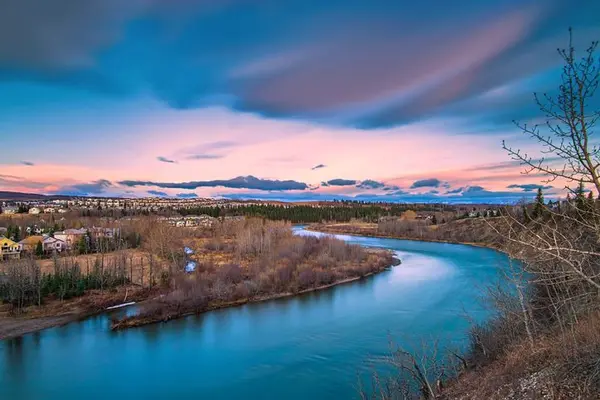
Cochrane sits at the eastern edge of the Bow River foothills, approximately 20 kilometres west of Calgary on Highway 1A. The surrounding Rocky View County land base offers a compelling mix of equestrian properties, lifestyle acreages, and larger ranch parcels, all within easy reach of the city. The mountain backdrop, the Bow River valley, and the area's historic ranching identity make Cochrane-area farm and farmland real estate among the most sought-after in Alberta.
Canmore and the Bow Valley Corridor
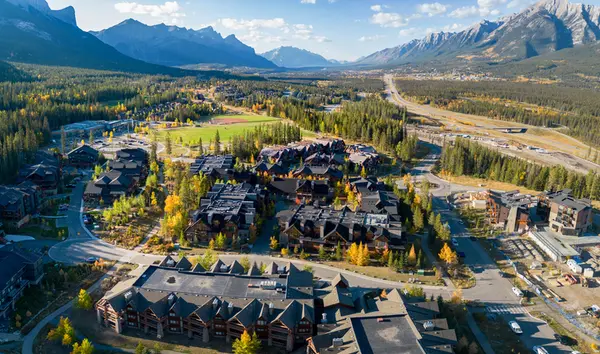
Canmore occupies one of Alberta's most distinctive real estate positions: a mountain town of roughly 16,000 full-time residents surrounded by Kananaskis Country and the M.D. of Bighorn No. 8, approximately 100 kilometres west of Calgary. Rural and acreage properties in this corridor (including parcels near Exshaw, Lac des Arcs, and Ghost Lake) offer dramatic mountain scenery, strong long-term appreciation, and access to world-class outdoor recreation year-round.
The Canmore market recorded 503 total property sales in 2024, with an average sale price of $1.14 million, an 8.5% year-over-year increase. Land availability here is structurally constrained by surrounding protected parks and mountain terrain, which limits developable inventory and supports long-term values for rural acreages in this zone.
Airdrie and North Rocky View County
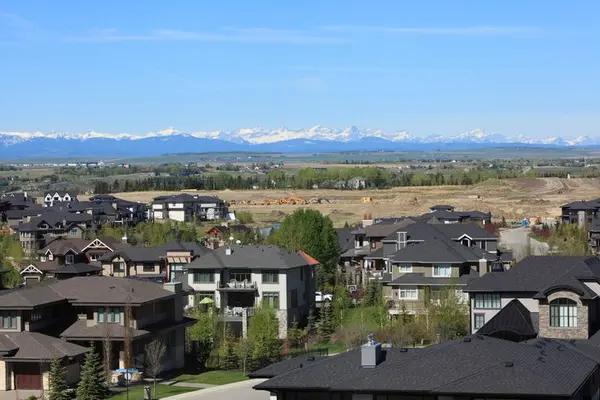
Airdrie is one of the fastest-growing cities in Alberta, with a population of 85,805 as of the 2024 municipal census, an approximately 6.4% increase in a single year. The farmland flanking it, particularly to the east and north in Rocky View County, offers proximity to urban employment and services without inner-city pricing. Acreages here typically range from 2 to 80 acres and attract a strong mix of hobby farmers, horse owners, and investors positioning for long-term land value appreciation as Calgary's northern growth corridor continues to expand.
Water Valley and Mountain View County (West)
Water Valley represents Alberta's foothills lifestyle at its most authentic. Located roughly 60 kilometres northwest of Calgary within Mountain View County, in the foothills east of the Rockies, it draws buyers who want dramatic scenery, a tight-knit creative community, and genuine rural character. Properties here often include creek frontage, mature tree cover, and mountain views, a combination increasingly rare this close to Calgary. Parcels range from small hobby acreages to significant ranch operations extending into the Sundre corridor.
Mountain View County (East and Central)
The flatter, more agricultural eastern portion of Mountain View County (encompassing Didsbury, Olds, Carstairs, and Innisfail) offers productive cultivated farmland, feedlot operations, and mixed grain-livestock farms. This is where serious producers and agricultural investors typically focus. Land prices are more moderate than foothills-adjacent areas, and the farming infrastructure, including elevators, feed suppliers, and agricultural services, is well established.
Selling Alberta Farm and Farmland: What Sellers (and Savvy Buyers) Need to Know
Selling Alberta farm and farmland is more complex than residential real estate, and understanding what sellers prioritize gives buyers a clear negotiating advantage, especially in off-market transactions that characterize this segment.
Accurate Pricing Is More Complex Than Residential
Farmland value depends on soil class, water availability, improvements, zoning, surface lease income, proximity to markets, and current comparable sales, not the residential matrix buyers may be used to. Overpricing leads to extended time on market; underpricing leaves real money behind. Buyers who understand this dynamic are better positioned to identify fair value when they see it.
Off-Market Deals Are Common
Many Alberta farm transactions (particularly larger ranches and multi-quarter operations) are handled quietly, before a property ever appears on MLS®. Sellers often prefer limited public exposure due to existing farm tenants, family succession considerations, or a preference for discreet marketing to qualified buyers. Working with a team that maintains active rural buyer and seller networks gives you access to opportunities that never reach public listings. Learn more about how the McMillan Real Estate Group team serves agricultural and rural clients.
Farm sales in Alberta can involve GST obligations on land not used for exempt residential purposes, capital gains considerations, and potential access to the Lifetime Capital Gains Exemption for qualified farm property. Engaging an agricultural lawyer and a tax accountant experienced in farm transactions (before listing or before submitting a serious offer) is strongly advisable.
Frequently Asked Questions: Alberta Farm and Farmland Real Estate
-
How much does farmland cost per acre in Alberta?
Alberta farmland prices range widely by region, soil class, and land type. According to Farm Credit Canada's 2025 report, average cultivated farmland values rose 11.4% province-wide, but per-acre pricing spans from under $5,000/acre for lower-productivity dryland parcels to $15,000–$25,000+/acre for high-quality irrigated or foothills-adjacent land. In the Cochrane and Mountain View County corridor, the foothills premium and lifestyle demand push smaller acreage prices well above provincial averages on a per-acre basis.
-
Do I need a special mortgage to buy a farm in Alberta?
Yes, farm and agricultural land financing is treated differently than residential mortgages. Expect higher minimum down payments (25–50% depending on property type), no CMHC insurance availability for raw land, and the need to work with lenders who specialize in agricultural or rural property financing. Farm Credit Canada (FCC) is the federal Crown lender dedicated to agricultural financing and offers tailored programs for everything from hobby farms to large commercial operations.
-
Can a non-Canadian buy farmland in Alberta?
Non-Canadian individuals and foreign-controlled corporations face significant restrictions. Under Alberta's Agricultural and Recreational Land Ownership Act, they may own a maximum of 20 acres of controlled agricultural land (two parcels) without a government-approved exemption. Canadian citizens and permanent residents face no such restrictions. Anyone in a cross-border or corporate ownership situation should obtain legal advice before proceeding with an Alberta farmland purchase.
-
What's the difference between a hobby farm and a working farm in Alberta?
A hobby farm or lifestyle acreage typically refers to a smaller property (5–40 acres) used for personal food production, horses, or rural living rather than commercial output. A working farm operates at commercial scale, generating income from crop sales, livestock, or leased production. The distinction matters for financing, tax treatment, insurance, and zoning permissions, and should be discussed with your realtor and accountant before purchasing.
-
What should I look for when buying a cattle ranch near Cochrane or Mountain View County?
- Focus on the following before making any offer:
- Total deeded versus leased acreage, and the terms of any existing lease arrangements
- Quality and capacity of water sources (licensed rights, wells, dugouts, creek access)
- Fencing condition and grazing capacity assessed in animal unit months
- Hay production potential and outbuilding / corral infrastructure
- Road access in all seasons, including spring break-up conditions
- Any existing surface leases, pipeline easements, or right-of-way agreements registered on title
Working with a realtor who genuinely understands livestock operations, and engaging a range agrologist for larger purchases, helps you avoid costly surprises.
Thinking of buying or selling?
Get your free home value | Get new listings sent to you first
Questions? Call or text Adam McMillan, Associate Broker with Real Broker, at 403-969-6991.
Categories
Recent Posts