
Mountain View County Acreages, Land, and Communities Guide
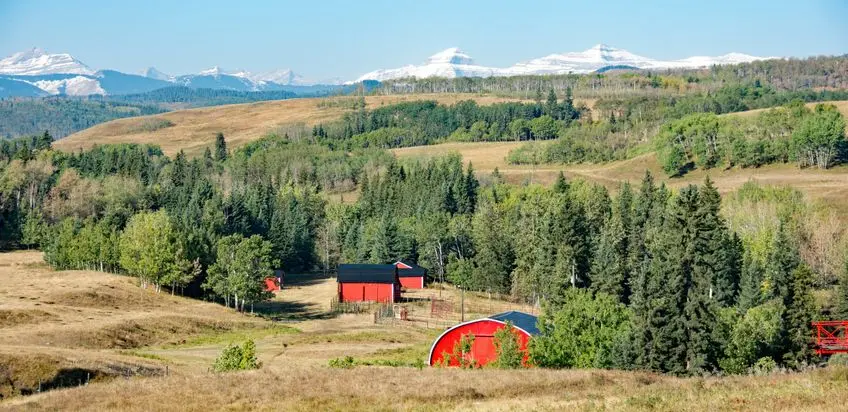
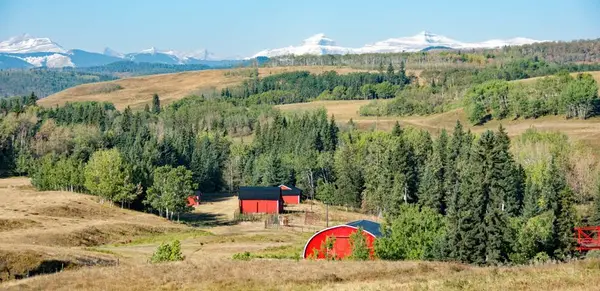
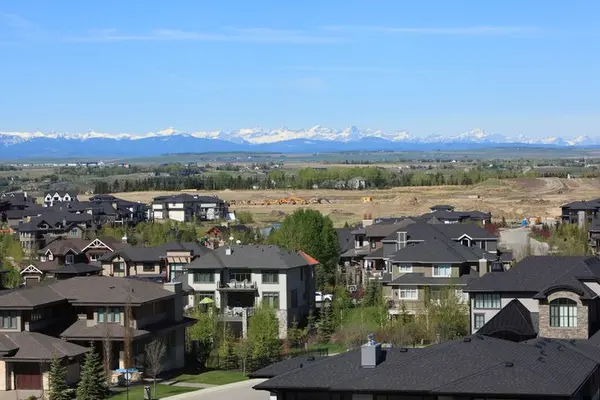
Mountain View County, Alberta, is one of Canada's most compelling rural real estate markets, a broad, scenic landscape stretching across central Alberta that accommodates everything from entry-level country residential parcels to sprawling equestrian estates and working farmland. This guide covers the county's land use districts, community profiles, due diligence checklist, and market character, so every buyer looking at Mountain View County acreages for sale has a clear starting point before making an offer.
What Kinds of Land and Acreages Are Available in Mountain View County?
Mountain View County offers one of the most diverse rural land inventories in central Alberta. The county spans approximately 3,815.6 square kilometres, and sits within the province's central corridor, meaning buyers gain genuine open-country space while remaining within practical commuting range of the province's two largest cities.
A Mountain View County acreage is any rural parcel within the county's boundaries, typically two acres or more, classified under the Agricultural, Country Residential, or Equestrian land use districts depending on intended use.
The primary property categories you will encounter include:
- Country residential acreages. Parcels typically ranging from two acres upward, designed for rural homes without active farming requirements. These are the most common entry point for families relocating from broader Alberta metro areas.
- Agricultural and farmland parcels. Working crop and grazing land, often larger quarter-section or multi-quarter-section tracts, suited to grain producers, ranchers, and cattle operations.
- Equestrian and hobby farm properties. Mid-sized acreages with existing or planned barn infrastructure, fenced pastures, and water systems, popular with horse owners and small-scale livestock keepers.
- Raw and vacant land. Undeveloped parcels zoned for agricultural or country residential use, available for buyers who want to design and build from the ground up.
- Luxury rural estates. Larger properties with custom homes, mountain views, shops, riding arenas, and premium finishes, representing the upper tier of the county's acreage market.
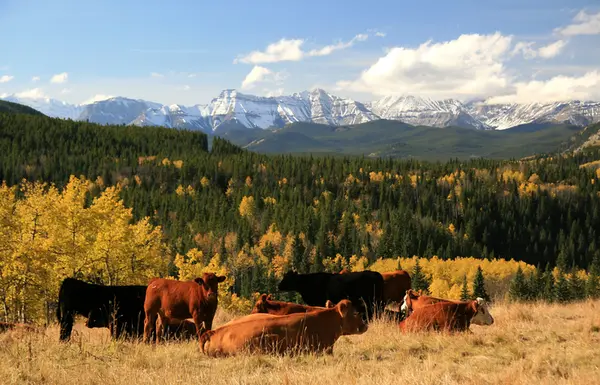
The county's landscape shifts noticeably from east to west. The eastern edge near Didsbury and Crossfield is flatter and more agricultural in character, while the western communities of Water Valley, Cremona, and the Sundre corridor move into foothills terrain with treed hillsides, creek valleys, and Rockies sightlines.
Understanding Mountain View County's Land Use Districts
Before making any offer on Mountain View County land, buyers need to understand which land use district governs the specific parcel. The current governing document is Mountain View County Land Use Bylaw No.10/24, adopted following a comprehensive public review process in 2023-24 that included three open houses and drew approximately 250 participants. The Bylaw is supported by the Municipal Development Plan under Bylaw No. 20/20.
The districts most relevant to acreage and land buyers are summarised below.
| Land Use District | Minimum Lot Size | Core Permitted Uses | Discretionary Approval Required? |
|---|---|---|---|
| Agricultural (A) | No minimum | Farming, ranching, crop production | For non-agricultural uses |
| Agricultural (2) (A(2)) | No minimum | Agricultural retention after subdivision | For residential intensification |
| Country Residential (R-CR) | 2 acres (0.81 ha) | Rural residential homes | For home-based businesses, added intensity |
| Country Residential (1) (R-CR1) | Confirm with county | Rural residential variant | Varies by use |
| Residential Farmstead (R-F) | Confirm with county | Separated farm residence parcel | Varies by use |
| Direct Control (DC) | Site-specific | Council-approved uses only | Per individual parcel regulations |
Within every district, uses are classified:
- Permitted (approved as of right once development standards are met, but still requiring a development permit before construction)
- Discretionary (requiring a public hearing and notification to adjacent landowners).
What a previous owner operated on a property is not automatically what a new owner may do. Always confirm permitted and discretionary uses for your specific parcel before purchasing, particularly if you plan to run a home-based business, add outbuildings, or change the intensity of land use.
Active redesignation applications in 2025 included conversions from Agricultural District to Country Residential, Country Residential (1), Residential Farmstead, Agricultural (2), and Parks and Recreation designations, reflecting continued rural residential demand across the county.
The Communities Within Mountain View County
Mountain View County's main acreage communities fall into two landscape zones: the flatter agricultural east (Didsbury, Crossfield) and the foothills west (Cremona, Water Valley, Sundre), each offering different property types and price points. Here is a snapshot, followed by a closer look at each community.
| Community | Landscape | Primary Buyer Profile | Approximate Drive to Nearest Urban Centre |
|---|---|---|---|
| Didsbury | Flat to rolling agricultural | Families wanting town services + rural land | Approx. 75 min |
| Crossfield | Open prairie, commuter corridor | Families making the rural move | Approx. 40-45 min |
| Olds | Agricultural, with college town services | Equestrian, ag buyers, and families | Approx. 90 min |
| Sundre | Foothills, Red Deer River valley | Outdoor enthusiasts, river-frontage buyers | Approx. 75-90 min |
| Cremona | Foothill setting, private acreages | Buyers seeking space and quiet at accessible prices | Approx. 70 min |
| Water Valley | Wooded foothills, creek properties | Buyers seeking forested or waterfront parcels | Approx. 70 min |
Didsbury
Didsbury anchors the county's administrative centre area and offers a full range of services including grocery, healthcare, schools, and recreation facilities. The surrounding area has a strong agricultural tradition, with flat to gently rolling land well-suited to grain and hay production. Buyers looking for a country residential acreage with town services nearby tend to be well-served by the Didsbury corridor.
Crossfield
Situated on the county's eastern commuter corridor, Crossfield attracts buyers who want rural acreage living with relatively short drives to urban employment. Land parcels in this corridor are often in high demand from families making the move to the country.
Olds
Olds is one of the county's largest service centres, home to Olds College of Agriculture & Technology and its well-regarded agricultural and horticultural programs. The town supports a strong equestrian and agricultural community, and surrounding acreages range from compact country residential lots to large working farm operations. Buyers seeking a balance of rural lifestyle and town-level amenities frequently focus their search on real estate around Olds.
Sundre
Sundre sits on the Red Deer River at the county's western edge, where foothills terrain and forested valleys create a distinctly different landscape from the open prairie of the east. The area draws outdoor enthusiasts, with river fishing, off-highway vehicle use, and trail riding all part of life out here. Discover acreages near Sundre that tends to carry more pronounced natural features, including creek frontage and treed hillsides.
Cremona
Cremona is a smaller village community with a tight-knit character and a scenic foothill setting just west of Highway 2A. Properties in the Cremona area often offer privacy and larger parcel sizes at price points that remain accessible relative to more prominent corridor communities.
Water Valley
Water Valley is perhaps the county's most distinctively rural community, a small hamlet nestled in the foothills with an arts community, a local pub that draws visitors from across the region, and a surrounding landscape of wooded acreages and creek properties. Buyers seeking forested or waterfront parcels, or properties with genuine off-the-beaten-track character, frequently focus on the Water Valley area.
What Is Driving Demand for Mountain View County Acreages?
Mountain View County's population reached 14,776 in 2025, up 7.67 percent year-over-year and 9.27 percent over the preceding five-year period, according to Alberta Regional Dashboard data published January 2026. That growth rate is notable for a rural municipal district and reflects a broader shift in buyer preferences toward space, lifestyle, and lower-density living.
Several factors drive continued interest in the county's land and acreage market:
Location within Alberta's central corridor. The county is positioned along a major provincial highway route, placing most of its communities within a practical commuting distance of the province's two largest cities. For buyers who commute part-time, Mountain View County represents a practical rural option without the full isolation of more remote Alberta locations.
Property size-to-price ratio. Rural parcels in Mountain View County typically offer substantially more land per dollar than comparable properties in nearby urban-adjacent corridors. This is particularly attractive to buyers who need space for horses, equipment, gardens, or outbuildings that would be impractical in a suburban setting.
Agricultural heritage and infrastructure. The county has a deep agricultural tradition. Buyers entering the market for a hobby farm, equestrian property, or small-scale livestock operation often find that existing rural infrastructure, including barns, fencing, water systems, and road access, is well-established relative to newer acreage areas recently converted from raw land.
Lifestyle and natural environment. The county encompasses foothills scenery, river corridors, open grassland, and wetland habitat. Outdoor recreation, from fishing the Red Deer River near Sundre to equestrian trail riding in the western foothills, is simply part of living out here.
Conservation and stewardship programs. Mountain View County has a long-standing partnership with ALUS Canada (Alternative Land Use Services) to fund on-farm environmental projects. In 2025, six local producers were approved for ALUS projects totalling $65,540, supporting 142 acres of wetland, riparian, and upland conservation work, according to The Albertan. For buyers drawn to land stewardship and conservation-compatible farming, the county offers both a program structure and a community culture that supports that commitment.
Key Due Diligence Considerations for Acreage and Land Buyers
Rural acreage buyers in Mountain View County need to verify the land use district designation, development permit requirements, well and septic condition, applicable setbacks, and any non-conforming use status before making an offer. Getting these questions answered before you commit saves expensive headaches down the road.
Confirm the land use district. Every parcel carries a specific district designation. Do not assume that because a neighbouring property operates a certain business or use, your target parcel is permitted to do the same. Confirm the designation using the county's web map or by contacting Planning and Development Services at 403-335-3311.
Understand development permit requirements. Nearly all new development in Mountain View County, including new buildings, additions, changes in use, and significant land grading, requires a development permit before work begins. Development commenced without a permit is illegal under the Land Use Bylaw.
Well and septic systems. The vast majority of acreages rely on private water wells and septic systems rather than municipal connections. The condition and capacity of both should be assessed through independent review before any offer goes firm.
Setback and lot coverage requirements. Setbacks define the minimum distance structures must be placed from property lines, roads, and other features. Highway setbacks near provincial highways are typically larger than those along local roads. Confirm specific requirements before designing any outbuilding, shop, or addition.
Non-conforming uses. A property may have been used in a way that is no longer permitted under the current bylaw. Purchasing a property with a non-conforming use does not automatically transfer the right to continue that use. Confirm the status with the county before purchasing.
Livestock and agricultural operations. Large confined feeding operations require approval from the Natural Resources Conservation Board (NRCB) in addition to any county permits. If you are purchasing land for a significant livestock operation, confirm both the county and NRCB requirements before proceeding.
Area Structure Plans and redesignation applications. Check whether any active Area Structure Plans or pending redesignation applications affect land near your target parcel. New developments in surrounding areas can affect access, visual character, and long-term land values.
Use the affordability calculator and mortgage calculator to work through initial budget estimates across different rural price bands as you narrow your search.
Acreage Price Ranges and Market Character
Transaction-level price data specific to Mountain View County rural land is not available from a source with a confirmed publication date, so the following reflects a qualitative overview of the market's general structure rather than a precise price report.
Country residential acreages at the entry level tend to be smaller parcels on the eastern, flatter portions near Didsbury and Crossfield, along the provincial highway corridor. Mid-range acreages typically involve more developed rural properties with existing homes, shops, or outbuildings, and may include water frontage or treed lots, particularly moving toward Cremona and Water Valley. The upper tier covers luxury rural estates with custom construction, mountain views, significant agricultural land bases, full equestrian infrastructure, and parcels that can run to well over 100 acres.
Farmland and agricultural land pricing reflects soil quality, water access, proximity to town services, and whether improvements such as buildings, grain storage, or irrigation systems are present on the parcel.
Regardless of price band, rural properties in Mountain View County can attract competitive interest when they combine location, usable acreage, and existing infrastructure, particularly in the equestrian and hobby farm segments where suitable properties with quality fencing, barns, and water systems are not always readily available.
If you are ready to explore Mountain View County acreages for sale, the all listings page provides a current view of available properties across the county and its communities.
FAQ: Mountain View County Acreages and Land
-
What is the minimum lot size for a country residential property in Mountain View County?
Under the Country Residential District (R-CR) in Mountain View County Land Use Bylaw No. 10/24, the general minimum lot size is two acres (0.81 hectares). The Country Residential (1) and Residential Farmstead districts have their own specific standards, which should be confirmed directly with Mountain View County Planning and Development Services at 403-335-3311.
-
Do I need a development permit to build a shop or outbuilding on a Mountain View County acreage?
Yes. Mountain View County requires a development permit for virtually all new construction, including outbuildings, shops, additions, and changes in use. Development that begins before a permit is approved is illegal under the Land Use Bylaw. Contact Planning and Development Services before starting any project.
-
Can I raise horses or livestock on an acreage in Mountain View County?
Many acreages in Mountain View County are well-suited to horses and livestock, and the Agricultural District permits farming and animal husbandry activities as of right. For smaller country residential parcels, permitted uses and animal density limits vary by district. Large confined feeding operations also require Natural Resources Conservation Board approval. Confirm what is permitted on your specific parcel before purchasing.
-
How far is Mountain View County from major Alberta cities?
Most communities in Mountain View County are within approximately 45 minutes to 90 minutes of the province's two largest cities via major provincial highways. Crossfield, on the eastern corridor, tends to have the shortest drive times, while Sundre, in the county's western foothills, sits at the longer end of that range.
-
What outdoor recreation is available for Mountain View County acreage residents?
The county offers substantial outdoor recreation. The Red Deer River corridor near Sundre supports fishing, kayaking, and off-highway vehicle use. The western foothills provide equestrian trail riding, hiking, and access to crown land. The county's wetland and riparian areas, actively supported through ALUS conservation programs, attract waterfowl and support wildlife habitat throughout the region year-round.
-
What is the ALUS program and does it apply to acreage buyers in Mountain View County?
ALUS Canada is a nationally funded program that pays farmers and ranchers to conserve and restore natural areas, including wetlands, riparian zones, and native grasslands. Mountain View County has an active local ALUS program supported by Alberta Agriculture and Irrigation and the Alberta Conservation Association. Acreage buyers interested in conservation-compatible land use may be eligible to participate, depending on parcel size and project type.
-
Is internet access available on Mountain View County acreages?
Connectivity varies across the county. Many acreages have access to wireless broadband or satellite internet services, but quality can vary significantly by location, particularly in more remote western areas near Water Valley and Sundre. Buyers who rely on high-speed internet for remote work should verify service availability at the specific property address before making an offer.
Thinking of buying or selling?
Get your free home value | Get new listings sent to you first
Questions? Call or text Adam McMillan, Associate Broker with Real Broker, at 403-969-6991.
Categories
Recent Posts