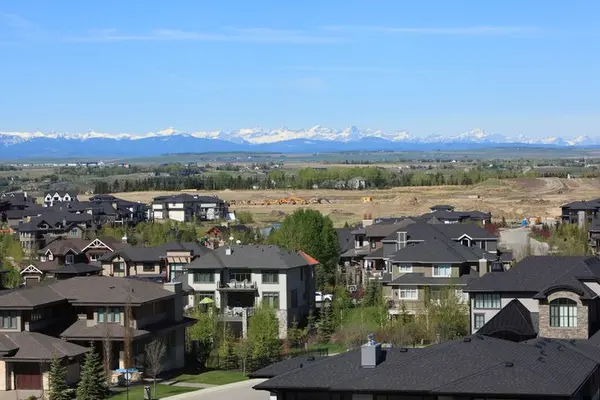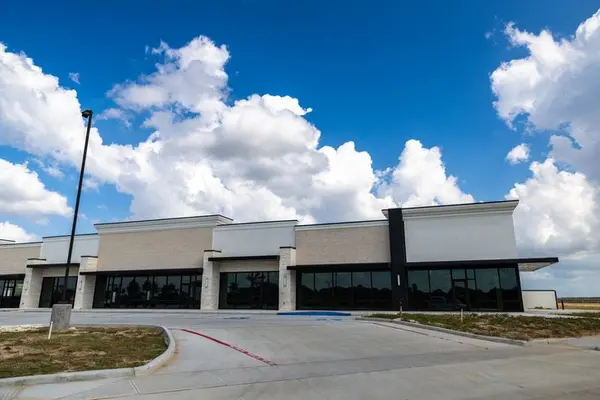

Industrial and Commercial Warehouse in Airdrie, Northeast Calgary and Southeast Calgary.
Calgary's greater industrial market is one of the tightest in Canada, and Airdrie, Northeast Calgary, and Southeast Calgary sit at the centre of that story. According to the most recently published Calgary industrial market data available, the overall industrial vacancy rate stood at 4.0%, representing a 70-basis-point decline from Q3 2025. The market also recorded approximately 2.4 million square feet of quarterly absorption, while 3.4 million square feet remained under construction, with roughly 2.5 million square feet (about 73.5%) pre-leased. For investors evaluating industrial and commercial warehouse space across Airdrie, Northeast Calgary, and Southeast Calgary, the fundamentals continue to point toward constrained supply, healthy occupier demand, and a construction pipeline that is already largely committed before delivery.
The sections below examine each submarket in turn, covering rent ranges, vacancy conditions, and investor fit, followed by a cross-submarket comparison and a framework for property-level due diligence.
Why Airdrie Has Become a Serious Industrial and Commercial Warehouse Hub
Airdrie functions as a self-sufficient logistics node because of three compounding factors: a sustained population growth trajectory, a supply of ready-serviced industrial land with Community Area Structure Plans already in place, and uninterrupted QE2 Highway access to both Calgary (approximately 35 km south) and Edmonton to the north. Together, these attributes give Airdrie structural advantages that extend well beyond its position as a Calgary satellite city.
The city's population reached 93,957 in the 2026 Municipal Census (City of Airdrie), following consecutive years of roughly 4–5% annual growth, with the City's growth planning indicating a trajectory toward 117,000 residents by 2031. That population curve drives consumption, distribution, and local services demand, all of which translate directly into warehouse and commercial space requirements.
On the supply side, Airdrie holds approximately 375 acres of serviced industrial land across light, medium, and heavy categories, plus 100 acres of commercial and mixed-use land with Community Area Structure Plans in place. The East Points Industrial development encompasses six quarter sections accommodating 348 acres of light industrial, 160 acres of medium industrial, and 256 acres of heavy industrial, with over 300 acres primed for near-term development. Pent-up demand, particularly for medium and heavy industrial, has kept vacancy low and the city well positioned for both speculative and build-to-suit activity.
Net lease rates for industrial and commercial warehouse space in Airdrie have ranged from approximately C$10.50 to C$13/SF net, with total occupancy costs typically in the C$14–17/SF range, broadly consistent with the broader Calgary metro, while reflecting Airdrie's advantages in land availability and municipal tax structure. The Airdrie market accommodates both entry-level strata units accessible to private investors and smaller owner-users, and upper-tier, purpose-built distribution facilities suited to investors targeting larger institutional-grade assets, a breadth that distinguishes Airdrie from the more segmented Calgary submarkets.
Northeast Calgary: Airport Adjacency and Industrial Warehouse Demand
Northeast Calgary's industrial and commercial warehouse submarket is structurally anchored by the Calgary International Airport and the TransCanada Highway corridor, making it the natural location of choice for time-sensitive distribution, air freight, cross-docking operations, and agricultural export logistics. The submarket accounts for approximately 37% of Calgary's total industrial building inventory, roughly 47.7 million square feet, making it the second largest by building stock (City of Calgary planning data, 2024).
Net lease rates in Northeast Calgary have generally ranged from approximately C$9 to C$11/SF net for functional industrial product, with better-positioned or more modern buildings commanding rates at or above the upper end of that range. The tenant mix spans agricultural processors, perishable goods distributors, e-commerce fulfilment operators, and energy services companies requiring secure yard space with highway access.
From an investment standpoint, the submarket spans a wide range of asset sizes and price points. Entry-level strata units in established industrial parks, including clusters around 52 Avenue NE, 36 Street NE, and the Meridian Industrial area, have traditionally offered accessible purchase points for smaller owner-users and private investors. These entry-level assets represent the most attainable industrial acquisition options within the City of Calgary proper, and their scarcity relative to demand is only growing. Larger multi-tenant facilities and freestanding distribution buildings attract institutional interest driven by the airport adjacency premium.
The submarket's primary structural challenge is a shortage of modern, small-bay product under 10,000 SF. Recent Calgary industrial market reporting indicates that smaller, locally focused businesses continue to face limited availability in the small-bay segment, particularly below 5,000 SF. As vacancy remains relatively tight across the broader market, existing owners of small-bay and multi-tenant industrial product retain meaningful pricing power and strong tenant-retention leverage.
Southeast Calgary: The Primary Industrial and Commercial Warehouse Corridor
Southeast Calgary is the dominant submarket by a substantial margin, approximately 60.8 million square feet of industrial building inventory, representing 47% of Calgary's total (City of Calgary planning data, 2024). Five structural factors define its appeal: direct Deerfoot Trail and Stoney Trail access, proximity to the CP Rail intermodal facility, the depth of its Class A building stock, the scale of its existing tenant base, and the liquidity it offers investors at exit. The Foothills Industrial, Shepard, and Dufferin districts form the core, and together they represent the preferred location for large-format logistics, food distribution, and e-commerce fulfilment across Western Canada.
Net lease rates for modern Class A industrial space in Southeast Calgary have ranged from approximately C$10 to C$12/SF net, reflecting strong occupier demand and the quality of the building stock. A flight-to-quality trend is most visible here: modern clear heights, efficient loading configurations, and energy-efficient building systems continue to outperform older Class B and Class C assets. Newer industrial facilities remain particularly attractive to logistics, e-commerce, and distribution occupiers seeking operational efficiency and lower long-term operating costs.
Several large-format warehouse projects are underway in the Shepard area, contributing to a Calgary-wide industrial construction pipeline of approximately 3.4 million square feet across ten developments. Of that total, roughly 2.5 million square feet, or about 73.5%, is already pre-leased, limiting the risk that incoming supply will materially weaken occupancy levels or rental rates in the near term.
Investment activity within Calgary's industrial market has remained active; however, investors should rely on verifiable transaction data from current brokerage and capital-markets reports when evaluating sales volume trends. Previously cited H1 2026 investment-sales figures could not be independently verified and have therefore been removed. Southeast Calgary assets have attracted both institutional capital and major private investors drawn by the submarket's scale, liquidity, and demand depth.
For investors seeking a lower-risk entry into Southeast Calgary, stabilized multi-tenant properties, including non-Class A product leased to strong regional tenants, offer defensible income with re-leasing optionality on expiry. These mid-range assets typically require lower upfront capital than institutional-grade Class A facilities, while still benefiting from the submarket's deep tenant demand and strong renewal fundamentals. The submarket's breadth means well-located assets across the quality spectrum can perform, not only the premium tier.
Comparing the Three Submarkets
Each submarket serves a distinct investor and occupier profile. The table below summarizes the key differentiators:
| Submarket | Approx. Net Rent (C$/SF) | Building Inventory | Best-Fit Asset Type | Best-Fit Investor Profile |
|---|---|---|---|---|
| Airdrie | C$10.50–13.00 | ~375 acres serviced industrial land | Strata units, owner-user, mid-format distribution | Value-oriented; growth-focused; entry-level to upper-tier |
| Northeast Calgary | C$9.00–11.00 | ~47.7M SF (37% of Calgary total) | Small-bay multi-tenant, airport-adjacent logistics | Entry-level to mid-market; small-bay specialists |
| Southeast Calgary | C$10.00–12.00 | ~60.8M SF (47% of Calgary total) | Class A distribution, large-format logistics; stabilized multi-tenant | Institutional to private; mid-range to premium; income-focused |
Rent ranges reflect aggregated commercial broker market data for the period ending Q2 2026 and will vary by specific property, term, and tenant covenant.
For investors weighing a first acquisition or broadening an existing industrial portfolio, these differences matter more than any single metric. Airdrie suits those seeking value and rent growth in a rapidly expanding city. Northeast Calgary fits investors targeting airport adjacency or underserved small-bay inventory. Southeast Calgary is the institutional-grade choice, with the deepest tenant pool and strongest asset liquidity, and a mid-range entry tier that remains accessible to private capital.
See the overview of commercial real estate across Cochrane, Airdrie, and Canmore for a broader view of how these industrial and warehouse markets fit into the greater Alberta commercial landscape, including opportunities in communities such as Cochrane and Canmore.
Key Factors Driving Industrial and Commercial Warehouse Demand Across All Three Submarkets
Five structural factors are driving sustained industrial warehouse demand across Airdrie, Northeast Calgary, and Southeast Calgary through 2026 and beyond.
Population growth and consumption. Alberta's population stood at approximately 5,048,151 as of January 1, 2026, the province continued to record the fastest growth rate of any province or territory in Q4 2025, fuelled by sustained interprovincial migration (Statistics Canada, Q4 2025 Population Estimates, released March 18, 2026). Airdrie recorded the largest absolute population gain of any Calgary-area municipality over the preceding five years, a trend that translates directly into demand for last-mile and regional distribution space.
Alberta's cost advantage. Alberta's 8% corporate income tax rate is the lowest in Canada, and the province has no provincial sales tax. These structural advantages make it more economical to warehouse and distribute goods from Alberta than from Ontario or British Columbia, attracting logistics operators and retailers who service Western Canada from an Alberta base.
Energy transition demand. The industrial tenant mix across Greater Calgary is diversifying. Large-scale clean energy industrial development is now active in the Greater Calgary region, including projects in Rocky View County, and solar manufacturing represents a category of net-new industrial demand that barely existed in this market five years ago. Wind turbine component manufacturers and hydrogen infrastructure operators are emerging as a new class of industrial tenant.
Pre-committed pipeline. Calgary currently has approximately 3.4 million square feet of industrial space under construction across ten developments, with approximately 2.5 million square feet already pre-leased, representing about 73.5% of the pipeline. Because most new inventory already has committed tenants, meaningful speculative supply remains limited, reducing downside risk for existing asset owners.
Small-bay scarcity. The sub-10,000 SF segment across Greater Calgary has experienced minimal new supply for an extended period. With vacancy in this segment compressed well below the overall market average, pricing power for owners of existing small-bay and multi-tenant product is at a structural high.
What to Look for When Evaluating an Industrial or Warehouse Property
Five property-level characteristics consistently separate resilient industrial assets from those that underperform across these three submarkets, regardless of whether you are targeting entry-level strata units or large-format distribution facilities.
| Evaluation Factor | Why It Matters |
|---|---|
| Clear height and loading | Modern logistics operations favour 28–36 ft clear heights with dock-level loading. Sub-24 ft product faces growing functional obsolescence. |
| Power capacity | E-commerce, manufacturing, and clean energy end-users have heavy power requirements; upgrade potential is a key underwriting criterion. |
| Yard space and security | Transportation, construction, and energy tenants consistently prioritize secure, paved yards for equipment staging and fleet parking. |
| Zoning flexibility | Light industrial zoning may restrict uses that medium or heavy designations would permit; understanding the full zoning envelope is essential before acquisition. |
| Bay size and divisibility | The ability to reconfigure bay sizing as tenants turn over adds long-term flexibility that supports value across market cycles. |
FAQ
-
What is the current industrial vacancy rate in Calgary and Airdrie?
Based on the most recently published Calgary industrial market data available, Calgary's overall industrial vacancy rate was 4.0%, down 70 basis points from Q3 2025. The market also recorded approximately 2.4 million square feet of absorption during the reported quarter. Airdrie's industrial vacancy has similarly remained tight relative to historical norms, supported by strong population growth, continued business formation, and ongoing demand for logistics and service-commercial space. Vacancy levels for individual properties and submarkets can vary significantly based on building size, age, and location.
-
What are typical net lease rates for warehouse space in these submarkets?
Net lease rates vary by submarket and asset quality. In Southeast Calgary, modern Class A distribution facilities have ranged from approximately C$10–12/SF net. Northeast Calgary product has generally ranged from approximately C$9–11/SF net. In Airdrie, net lease rates have ranged from approximately C$10.50–13/SF. Total occupancy costs, including operating expenses and property taxes, typically add C$4–6/SF on top of the net rate, bringing all-in costs into the C$14–17/SF range across most of the market. These figures reflect aggregated commercial broker market data for the period ending Q2 2026 and will vary by specific property, term, and tenant covenant.
-
Is it better to buy or lease industrial warehouse space in these markets right now?
In a market where vacancy is compressed and rents carry upward momentum, purchasing an owner-user property locks in occupancy cost and builds equity, a position many local businesses are actively pursuing. Leasing preserves capital for core operations and retains flexibility to scale space requirements, but it exposes occupiers to renewal risk in a landlord-favourable market. Investors acquiring income-producing assets should expect continued competition for well-located industrial properties, particularly modern logistics facilities and scarce small-bay product. Tight vacancy, strong absorption, and a largely pre-leased development pipeline continue to support investor interest across Calgary's industrial market.
-
Are there differences between buying industrial property for investment versus for owner-use?
Yes. Owner-user buyers typically focus on operational criteria, clear height, power, yard space, proximity to their labour pool and customer base. Investors acquiring for income weigh tenant covenant strength, lease term and renewal options, rent escalation clauses, and the ability to re-tenant at or above market on expiry. In the current small-bay environment, investors who own well-located multi-tenant product are in a particularly strong position: tenant demand is deep, alternatives are scarce, and that combination supports rent growth on renewals and new leases alike.
-
How does Airdrie compare to Northeast and Southeast Calgary for industrial investment?
Airdrie generally offers more land availability, lower entry price points for comparable building quality, and a growth trajectory tied to one of Alberta's fastest-growing cities. The Airdrie market spans both accessible entry-level strata units for private investors and upper-tier purpose-built distribution facilities, giving it the widest asset-class range of the three submarkets. Northeast Calgary provides airport adjacency and established industrial park infrastructure, suited to logistics tenants with air freight or time-sensitive distribution requirements, and its small-bay inventory is among the most attainable entry point for first-time industrial investors in the city. Southeast Calgary is the largest and most liquid submarket, with the deepest pool of institutional-grade assets, a strong mid-range multi-tenant tier, and the most robust concentration of national and international logistics tenants. The right choice depends on asset size, target tenant type, and investment horizon.
Categories
Recent Posts