Selling Farmland in Alberta Guide
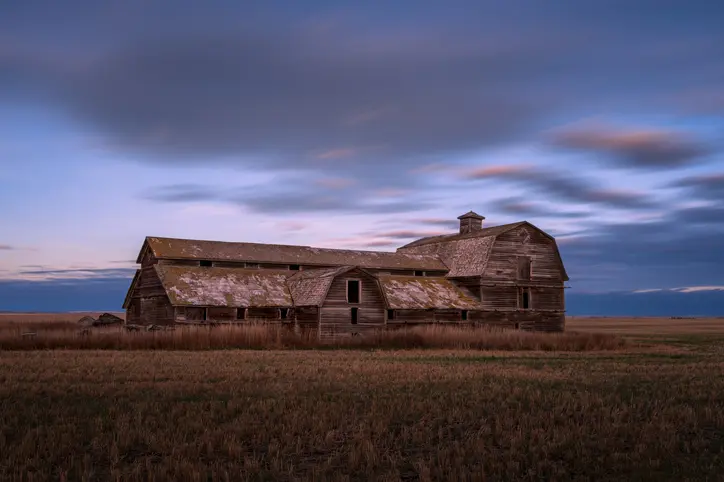
Selling Farmland in Alberta Guide
By Adam McMillan, McMillan Real Estate Group
Selling farmland in Alberta means navigating three distinct land markets, province-specific foreign ownership rules, and a federal tax exemption that can shelter well over a million dollars in capital gains per person, and each of these pieces can materially change what actually lands in your pocket at closing. According to the 2025 FCC Farmland Values Report, Alberta cultivated farmland values rose 11.4% in 2025, the second-largest provincial gain in the country behind only Manitoba at 12.2% and ahead of Saskatchewan at 9.4%. That performance makes thorough preparation the more urgent question for you as a seller: are you positioned to capture what the market is actually willing to pay, or are you leaving money on the table through pricing guesswork, missed tax planning, or a listing that doesn't reach the right buyer pool?
This guide walks through every stage of selling farmland in Alberta, from understanding how your land is valued to navigating the legal and tax requirements unique to agricultural property in this province.
Data in this article reflects the 2025 FCC Farmland Values Report (covering January 1 to December 31, 2025) and Farming Smarter's coverage of that report, both published March 24, 2026. Tax figures reflect the CRA's official 2026 indexation adjustment and Bill C-15 (the Budget 2025 Implementation Act, No. 1), which received Royal Assent on March 26, 2026. Confirm how these figures apply to your specific situation with your CPA before acting.
What Makes Alberta Farmland Different to Sell
Alberta farmland sales differ from residential transactions in three key ways: land classification rules that determine which buyer pool can compete for your property, provincial foreign ownership regulations that affect who can legally take title, and a federal tax exemption that can shelter a significant portion of your capital gain, provided your property qualifies.
Beyond those three layers, Alberta agricultural sales involve active lease agreements, surface rights arrangements, mineral rights considerations, and a regional market structure where per-acre values vary significantly between the irrigated south, the Peace Region grain country, and the central parkland belt. Each adds both opportunity and obligation that residential transactions don't carry, and each is a lever you can pull in your favour with the right preparation.
Alberta's agricultural landscape spans multiple distinct regions, from high-value irrigated districts in the south to expansive grain country in the Peace Region, and two parcels of the same size in different counties can carry materially different per-acre values. Understanding where your property sits within that regional structure, and which buyer pool is most likely to compete for it, is where a sale either gains or loses momentum before it reaches the market.
How Alberta Farmland Is Valued
Accurate pricing is the single most important decision in any Alberta farmland sale, and the spread between land categories is substantial enough that getting this wrong costs real money either way: price too high and buyers pass you over, price too low and you've handed equity away.
The 2025 FCC Farmland Values Report, as covered by Farming Smarter, reported the following southern Alberta per-acre averages for 2025:
| Land Type | 2025 Average ($/acre) | 2025 YoY Change |
|---|---|---|
| Cultivated dryland (southern AB) | ~$5,800 | +16.4% |
| Irrigated land (southern AB) | ~$20,000 | +11.3% |
| Pastureland (southern AB) | ~$4,100 | +3.5% |
These figures reflect southern Alberta specifically. Regional variability across the province is significant, including notably lower per-acre values in the central parkland belt around Mountain View County, which makes a professional, region-specific valuation essential before you settle on a list price.
Soil Capability
Soil class, workable acres, drainage, and consistency across the parcel form the foundational metric for cultivated land. A quarter section with strong, consistent soil and good drainage can command a materially different per-acre price than land of similar size in the same county with heavier texture or moisture limitations, so knowing exactly what you're offering matters before you set a number.
Water Access
Water access is a value driver that can shift a negotiation quickly. For irrigated land in southern Alberta, where water allocation licenses are constrained and cannot be manufactured, buyers price scarcity directly into their offers. For pastureland, the presence of reliable dugouts, creeks, or wells directly affects carrying capacity and, therefore, value.
Road Access and Improvements
Year-round road access reduces operational friction for farming buyers and increases the property's financeability, which widens your buyer pool. Functional infrastructure (a solid yard site, grain storage, livestock handling setup) can add to buyer confidence, though not every improvement translates to a dollar-for-dollar price increase. Outdated or non-functional buildings may create a discount rather than a premium, so it's worth an honest look at what's actually adding value versus what's just adding clutter.
Title Clarity and Mineral Rights
Alberta operates under the Torrens title system, meaning registered interests, easements, caveats, and encumbrances are all discoverable, and your buyer's lawyer will discover them. Crown ownership of mineral rights is the default in most of the province, which is common knowledge among agricultural buyers, but surface lease agreements, pipeline right-of-way arrangements, and other third-party interests should be documented and disclosed upfront so they don't surface as a surprise mid-transaction.
Location and Regional Demand
Southern Alberta irrigated districts, Peace Region grain country, and parcels near growth corridors around communities like Crossfield, Didsbury, Olds, or Sundre each carry different demand profiles and buyer pools. Provincial averages alone can't capture these differences, which is exactly why a property-specific comparison matters more than a headline provincial figure.
Understanding Alberta's Foreign Ownership Restrictions
Alberta's Agricultural and Recreational Land Ownership Act and the accompanying Foreign Ownership of Land Regulations restrict the acquisition of prime agricultural land by non-Canadians and foreign-controlled corporations. As a seller, this affects who you can legally transfer your land to, and understanding it early prevents delays at Land Titles that could otherwise stall your closing.
Under current regulations, non-Canadians and foreign-controlled corporations may own a maximum of two parcels of controlled land, with an aggregate area not exceeding 20 acres in total, unless an exemption applies. A foreign-controlled corporation is generally one where foreign ownership is 50% or greater.
Controlled land includes prime agricultural and recreational land outside the boundaries of a city, town, village, or summer village. Urban lands are excluded from the definition.
For you as a seller, the practical implication is this: when your buyer is an incorporated entity, your lawyer needs to determine whether that corporation is Canadian-controlled before registering the transfer. A Foreign Ownership of Land Declaration will accompany most transfers, even smaller acreages, to prevent processing delays.
Exemptions exist for certain industrial, commercial, or resource-related purposes, and an Order in Council process is available for estate or development situations that fall outside standard categories. If your transaction involves a non-Canadian buyer, legal advice specific to that transaction protects you from delays down the line.
The Tax Landscape: Capital Gains and the Lifetime Capital Gains Exemption
Selling farmland in Alberta almost always generates a capital gain, and how well the sale is structured can make a real difference to what you keep. Professional advice from a CPA experienced in agricultural transactions can pay for itself many times over here.
The Lifetime Capital Gains Exemption (LCGE)
The LCGE is the most powerful tool available to you as a farm seller, and it's now firmly in place. Bill C-15, the Budget 2025 Implementation Act, No. 1, received Royal Assent on March 26, 2026, formally enacting the increase to $1.25 million for dispositions of Qualified Farm or Fishing Property (QFFP) occurring on or after June 25, 2024. With indexation resuming in 2026, the CRA's official indexation table sets the exemption limit at $1,275,000 per individual for 2026, up from $1,250,000 in 2025. Since only half of a capital gain is taxable, the resulting deduction limit works out to $637,500 for 2026. For farms jointly owned between spouses, or structured to include other qualifying family members, it may be possible to multiply the exemption across individuals with careful advance planning, meaning the tax-free portion of a sale can add up quickly for a family operation.
To qualify as Qualified Farm or Fishing Property under the Income Tax Act, the land generally must have been used principally in a farming business in Canada, and that use must meet specific duration and activity tests.
For property acquired after June 18, 1987, additional eligibility criteria apply: farming gross revenue must have exceeded net income from all other sources for at least two years, or the property must have been used by a family farm corporation or partnership with a qualifying person actively and continuously engaged in the operation. These tests are precise, and a CPA experienced in agricultural dispositions should assess your eligibility well before the sale closes.
Purification Planning
Purification planning is relevant if your farm has non-farming assets (investments, rental income, or passive holdings) embedded in the same corporate entity as the farm property. These assets can potentially disqualify the property from QFFP status, which would cost you access to the exemption above. A CPA can advise on whether a purification process is needed before your sale closes.
Restricted Farm Losses and Principal Residence
Restricted farm losses from prior years may be applied to reduce capital gains on farmland sold in the same year, specifically the property tax and interest components of those losses. The capital gain on farmland is reported on Schedule 3 under Qualified Farm or Fishing Property.
For land that includes your principal residence, special rules apply to apportion the gain between the exempt residence portion and the taxable land portion. This detail surprises many sellers and underscores the importance of a pre-sale tax review with your accountant.
Preparing Your Farmland for Sale
Effective preparation covers five practical areas: organizing title documents, reviewing any lease agreements, obtaining a professional valuation, assessing infrastructure, and understanding any development overlay potential. Addressing each one before listing affects either the size of your buyer pool or your negotiating position, so this is where the groundwork for a strong sale actually gets laid.
Organize Your Documents Early
Gather your certificate of title, any existing lease or crop-share agreements, surface lease agreements, water licenses, tax assessment notices, soil test results if available, and historical yield records. Buyers doing due diligence will ask for these, and having them ready signals a professionally managed property and speeds up your closing.
Understand Your Tenant Situation
If your farmland is currently farmed under a lease agreement, that lease must be disclosed to prospective buyers, and the lease terms will affect possession timing and, in some cases, the buyer pool. Review whether your lease contains any right of first refusal language in favour of the current tenant, as this may create an obligation to offer the tenant the opportunity to purchase before the property goes to market.
Get a Professional Valuation
A formal appraisal from an appraiser holding the AACI (Accredited Appraiser Canadian Institute) designation granted by the Appraisal Institute of Canada provides a defensible market value opinion that supports your list price and gives you a strong position in negotiations. A valuation from an agent with agricultural transaction experience is a useful complement to a formal appraisal, and in many cases sellers work with both before setting an asking price.
Assess Improvements and Infrastructure
Consider whether deferred maintenance on buildings, fencing, or water systems will be raised by buyers as a price reduction argument. Addressing issues that are low-cost to fix but high-visibility to buyers can improve both the perceived quality of the listing and the final negotiated price.
Understand Development Overlay Potential
Parcels near communities or designated growth areas may carry additional value to buyers with non-agricultural or mixed-use intentions. Confirming the land use designation and any applicable county or municipal development overlay with a real estate lawyer before listing can inform both your pricing strategy and your buyer outreach.
Choosing Your Sale Method
Alberta farmland sellers have several transaction structures available, and the right choice depends on your price expectations, timeline, privacy preferences, and the likely buyer pool for your specific property.
| Sale Method | Best Suited For | Main Advantage | Main Risk |
|---|---|---|---|
| Private treaty (listed sale) | Properties with clear comparable sales | Seller controls timing, conditions, negotiation | Outcome depends on effective marketing reach |
| Public auction or tender | Broadly appealing parcels in strong markets | Competitive bidding can push price above expectations | Final price is less predictable |
| Direct sale to known buyer | Neighbour or adjacent operator transactions | Low friction, efficient process | Risk of underpricing without professional valuation |
| Vendor financing (land contract) | Family transfers or buyers with financing constraints | Enables sales that bank financing can't support | Requires careful legal and tax structuring |
In an active market like the one Alberta experienced through 2025, auction processes have succeeded in pushing final prices above expectations on well-presented parcels. Whichever method you choose, legal and tax advice before you proceed is strongly recommended, particularly in a direct or vendor-financed transaction.
The Closing Process and What to Expect
Once you have accepted an offer, the closing process for Alberta farmland typically runs 60 to 90 days for conditions to be waived and the transfer to complete, with timelines extending further when financing, title search complexity, or foreign ownership declaration requirements add steps.
Your real estate lawyer will handle the title transfer registration with the Alberta Land Titles Office, confirm that all caveats and encumbrances are addressed, and manage the payout of any registered mortgages. If the transaction involves an environmental assessment, which may be required by the buyer's lender for certain property types or histories, allow additional time in the closing schedule.
Surface rights and mineral rights documentation should be reviewed and clearly addressed in the purchase contract. While the Crown owns the majority of mineral rights in the province by default, any privately held mineral interests should be explicitly addressed as either included or excluded in the sale.
If you're weighing timing and positioning on the buying side as well, our companion guide on farmland for sale in Mountain View County covers what buyers in this market are looking for, which is useful context if you're selling one property while shopping for another.
Working With the Right Advisors
Selling Alberta farmland well requires a coordinated team. The four core advisors and their primary roles are:
| Advisor | Primary Role in the Transaction |
|---|---|
| Real estate agent with agricultural experience | Regional land values, buyer pool strategy, rural property marketing |
| CPA familiar with farm taxation | LCGE eligibility, intergenerational transfer options, purification planning, sale timing |
| Real estate lawyer | Title review, Foreign Ownership declarations, lease assignments, transfer registration |
| AACI-designated appraiser (Appraisal Institute of Canada) | Defensible market value opinion for pricing support and lender requirements |
Whether you're selling a mid-range cultivated quarter section or a large-scale irrigated operation, the team composition is the same, though the stakes at higher price points make each advisor's contribution more consequential to your bottom line.
If you're weighing whether now is the right time to sell, our broader guide to Alberta farm and farmland real estate covers additional context from both sides of the transaction. And if your plans include selling a home alongside your land, the preparation and timing principles that apply to residential sales carry over in useful ways.
FAQ: Selling Farmland in Alberta
What is the Lifetime Capital Gains Exemption for farmland in Alberta?
- The LCGE for Qualified Farm or Fishing Property is $1,275,000 per individual for 2026 dispositions, up from $1,250,000 in 2025, per the CRA's official indexation table.
- This is now enacted law under Bill C-15, which received Royal Assent on March 26, 2026.
- An eligible seller can shelter up to that amount of capital gain from tax entirely.
- Spouses and qualifying family members may each be able to claim the exemption through careful pre-sale planning, effectively multiplying the shelter available to the family.
Can non-Canadians buy farmland in Alberta?
- In most cases, no, or only in very limited quantities.
- Under Alberta's Agricultural and Recreational Land Ownership Act and the Foreign Ownership of Land Regulations, non-Canadians and foreign-controlled corporations may own a maximum of two parcels of controlled land with a combined area not exceeding 20 acres, unless an exemption or Order in Council applies.
- As a seller, your lawyer needs to confirm the buyer's eligibility before the Land Titles transfer is registered.
How long does it take to sell farmland in Alberta?
- Timelines vary significantly based on property type, market conditions, and the chosen sale method.
- Listings in high-demand areas with strong soil classification and full documentation can attract conditional offers within weeks.
- More specialized parcels (large irrigated holdings, properties with environmental complexity, or those requiring foreign ownership clearances) can take several months.
- Plan for a 60 to 90 day closing period after an offer is accepted, plus the pre-listing preparation phase.
Does an existing farm lease affect the sale price or process?
- Yes, in several ways.
- An active lease must be disclosed to buyers and will affect possession timing.
- Buyers intending to farm the land themselves will typically seek a possession date aligned with or shortly after lease expiry.
- If the lease contains a right of first refusal in favour of the current tenant, you may be obligated to offer the tenant the opportunity to purchase before going to the open market.
- Review your lease agreement with a lawyer before listing.
What are the main factors that determine farmland value in Alberta?
- Soil capability and consistency.
- Water access, including irrigation licenses where applicable.
- Road access and year-round accessibility.
- The quality and functionality of improvements.
- Legal clarity of title, and the presence and terms of any existing leases.
- Proximity to infrastructure and markets, and current buyer demand in that specific county or region.
Should I sell farmland privately or through public auction in Alberta?
- It depends on your property and objectives.
- Private treaty gives you control over timing, conditions, and price negotiation, and works well when comparable sales support a clear asking price.
- Auction or tender can generate competitive bidding for well-prepared, broadly appealing parcels, particularly in a strong market like Alberta has seen recently, but leaves the final price less predictable.
- Discuss both options with an agricultural real estate agent who knows your specific regional market before deciding.
Working With a Local Team
McMillan Real Estate Group is a licensed real estate team based in Water Valley, Alberta, right in the heart of Mountain View County farm country, serving buyers, sellers, and property owners across Mountain View County, Rocky View County, Cochrane, Airdrie, Canmore, and Northwest Calgary. Broker Associate Adam McMillan works alongside Residential Agent Josee McMillan, handling residential, commercial, rural and acreage, and property management transactions, and the team is affiliated with Real Broker. Rural and acreage property sales are one of the team's core services, and Adam's own base in Water Valley means the day-to-day realities of farming and ranching in this region aren't theoretical. If you're weighing a farmland sale, a conversation with someone who works this specific market is a good place to start. Reach the team at +1 (403) 969-6991 or through mcmillanrealestategroup.ca.
Thinking of buying or selling?
Get your free home value | Get new listings sent to you first
Questions? Call or text Adam McMillan, Associate Broker with Real Broker, at 403-969-6991.
Categories
Recent Posts