Buying a Commercial Building in Cochrane, Alberta: Complete Guide
Buying a commercial building in Cochrane, Alberta involves more steps, more due diligence, and different financing criteria than a residential purchase. Here is what to expect at each stage. Cochrane's sustained population growth, active commercial development pipeline, and updated Land Use Bylaw create a genuine window for buyers who understand the local landscape, but the process requires careful navigation of zoning, financing, and legal workstreams before you commit.
This guide covers everything from understanding Cochrane's commercial zones to structuring your offer, completing due diligence, and closing your transaction.
Why Cochrane's Growth Makes Commercial Real Estate Worth Watching
Cochrane is one of Alberta's fastest-growing municipalities, and that growth directly drives commercial demand. The Town of Cochrane's 2024 municipal census recorded a population of 37,011, reflecting approximately 5% year-over-year growth, with 43% cumulative growth between 2016 and 2024. More recently, the Town of Cochrane's 2025 Development Summary Report confirms that population growth continued at an estimated 6.4% in 2025, adding roughly 2,374 residents and bringing the total estimated population to 39,385.
That pace matters for commercial buyers because population growth translates directly into consumer spending, service demand, and tenant interest. In 2025, the Town processed approximately 240 development permit applications, with 55 classified as non-residential, covering commercial, industrial, and institutional projects. The same report notes approximately 39.28 hectares of approved, developable non-residential land remaining across nine active growth areas, as of the 2025 Development Summary Report.
Cochrane has historically ranked among Alberta's more educated and higher-income communities, a demographic profile that supports both owner-occupied business locations and income-generating investment properties.
Understanding Cochrane's Commercial Land Use Districts
Before you search for a property, you need to understand what uses are permitted where. The Town of Cochrane adopted its current Land Use Bylaw in February 2022, replacing a framework that had been in place since 2004. The bylaw organizes land into five district types: residential, commercial, industrial, urban service, and direct control.
For commercial buyers, the relevant distinctions come down to three categories.
Commercial districts permit retail, professional services, food and beverage, and personal service operations, among other uses. The updated bylaw also allows flexibility for modern uses including breweries and temporary commercial services, a significant shift from the previous framework.
Industrial districts range from Business Industrial, covering light manufacturing, warehousing, and service commercial, through General Industrial for heavier operations. If you are buying a warehouse, service bay, or manufacturing facility, you will be operating under the industrial designation.
Direct control districts apply to specific developments where the municipality has negotiated unique development standards. Several parcels within master-planned communities like Greystone fall under direct control designations.
Parking stall minimums have been removed for non-residential properties under the 2022 bylaw. Parking adequacy is now evaluated in the context of each individual application, which provides more flexibility for buyers adapting existing buildings to new uses.
Before making an offer, confirm the property's current land use designation and verify that your intended use is either a permitted or discretionary use within that district. Development permit requirements differ between the two categories, and discretionary uses require a formal application and public notice period. Contact the Town of Cochrane's Planning Services directly or review the consolidated bylaw on cochrane.ca.
For more background on commercial real estate activity in this region, the Cochrane commercial real estate market overview covers broader market context.
Types of Commercial Buildings Available in Cochrane
Cochrane's commercial inventory generally falls into four categories, each suited to a different buyer profile.
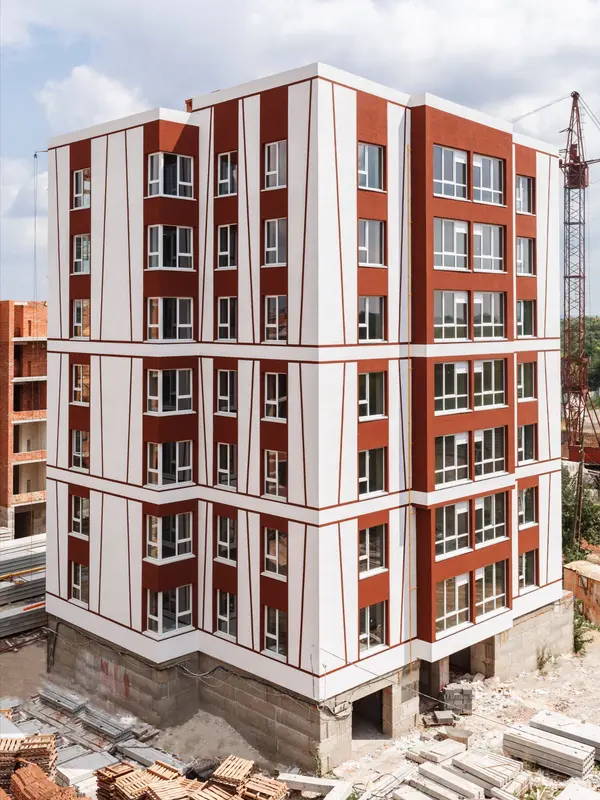
Retail and mixed-use storefronts are most concentrated along the Highway 1A corridor and in the downtown core. These attract owner-occupiers running service businesses, professional offices, and specialty retail, as well as investors seeking multi-tenant income.
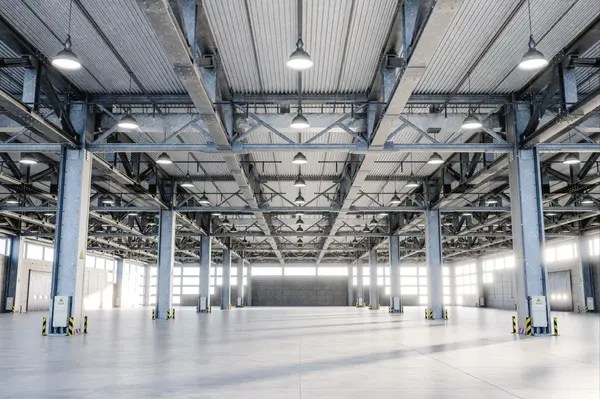
Industrial and warehouse properties are found in established warehouse districts and newer industrial zones within growth communities. Cochrane's warehouse district includes older heritage-style buildings, while newer parks offer purpose-built facilities with modern specifications.
Office condos and professional suites suit buyers who want to own their workspace rather than lease. Owner-occupied commercial financing is particularly well suited to this type of purchase.
Land and development opportunities remain available in growth communities. As of the 2025 Development Summary Report, Southbow Landing holds approximately 20.95 hectares of approved non-residential land, the highest of any active growth area in Cochrane, with additional commercial land in Greystone and Heritage Hills.
How Financing Works for a Commercial Building Purchase
Commercial financing in Alberta operates differently from residential mortgages in several important ways.
Down payment requirements. Most lenders require a minimum down payment in the range of 20% to 35% for commercial properties, depending on property type, location, and the financial strength of the borrowing entity. Investment properties, where a buyer plans to lease the property to third-party tenants, generally face stricter criteria than owner-occupied purchases.
Owner-occupied versus investment financing. If you plan to operate your own business from the building, you may qualify for owner-occupied financing. Lenders typically require the owner to use at least 51% of leasable space for their own business operations. Net operating income generally needs to cover 1.20 to 1.25 times the annual debt service obligation, and the business must typically have been generating revenue for at least 24 months, with supporting financial statements.
Amortization periods. Commercial real estate loans in Canada can be amortized over up to 25 years. Mortgage terms are shorter than in residential lending, often ranging from one to ten years, after which the loan is renewed or refinanced.
Interest rates. Commercial mortgage rates in Canada fluctuate with the Bank of Canada's policy rate and with borrower-specific risk factors including property type, lease structure, and business creditworthiness. Rate quotes are property-specific and should be obtained from Canadian lenders or mortgage brokers licensed in Alberta. A mortgage calculator for Alberta buyers can help you model payment scenarios while you assess your options, but it should be paired with a written quote from a lender.
GST considerations. The purchase of a commercial building in Canada is generally subject to GST. Buyers who are GST registrants may be eligible to claim Input Tax Credits, effectively recovering the GST paid. This requires proper structuring at closing. Consult a qualified tax advisor and Alberta legal counsel before the transaction closes.
Alberta Land Titles registration fees. Transferring title in Alberta involves a land transfer registration fee of $50 plus $5 for each $5,000 or portion of the land value, effective October 20, 2024. Mortgage registration carries an equivalent structure. These are statutory fees that apply on top of legal and professional costs.
| Key Financing Parameter | Typical Range |
|---|---|
| Down payment | 20% to 35% (varies by property type and borrower profile) |
| Amortization period | Up to 25 years |
| Mortgage term | 1 to 10 years |
| GST | Applicable (Input Tax Credits may apply for GST registrants) |
| Alberta Land Titles registration fee | $50 + $5 per $5,000 of land value |
Due Diligence - What You Must Review Before Removing Conditions
Due diligence on a commercial building is substantially more complex than on a residential property. A thorough process for an Alberta commercial purchase spans multiple workstreams, each with its own timeline and professional requirements.
Title and ownership searches confirm registered interests including mortgages, caveats, easements, and restrictive covenants. Encumbrances can restrict development, affect financing, or create third-party rights that survive closing.
Real Property Report with municipal compliance confirms that buildings, improvements, and boundaries comply with the Town of Cochrane's current bylaw requirements.
Zoning and permit review verifies that the property's existing and intended uses conform to the land use designation, and that no outstanding development orders or stop-work orders are registered.
Environmental Site Assessment. For industrial properties or any site with a history of fuel storage, manufacturing, or specific commercial operations, a Phase I ESA is standard. If Phase I identifies areas of concern, a Phase II investigation involving soil or groundwater sampling follows. In Alberta, environmental liability can attach to a new landowner regardless of fault, making this search essential.
Alberta Energy Regulator search. For properties with any land area that may have supported energy infrastructure, an AER search identifies active, suspended, or abandoned wells, which carry ongoing regulatory and remediation obligations.
Lease review and rent roll analysis. If the property is tenanted, review every lease, amendment, and associated deposit. Confirm that the rent roll matches executed lease documents and that no undisclosed tenant rights, options, or obligations exist.
Property tax search. Confirms current tax status and identifies any arrears, since unpaid taxes can transfer to the buyer.
The conditions period in your purchase agreement is the window in which these searches are completed. Alberta commercial purchase agreements allow buyers to negotiate separate condition deadlines for financing, title, zoning, environmental, and lease workstreams. Separating these workstreams with defined delivery obligations, review deadlines, and waiver processes is a structural requirement of a well-drafted commercial agreement, not a stylistic preference.
Do not treat the conditions period as a formality. Each workstream requires professional engagement and adequate lead time.
The Offer and Negotiation Process
Commercial offers in Alberta are not governed by standardized forms in the way that residential transactions are. Your offer will be a customized commercial purchase and sale agreement that addresses the transaction perimeter, consideration structure, deposit terms, title requirements, due diligence conditions, and closing logistics.
Key elements to establish clearly before making an offer:
Property and asset perimeter. Specify exactly what is included: land, buildings, fixtures, tenant improvements, equipment, leases, and any other assets or liabilities being transferred. A civic address alone is not a complete description for legal purposes.
Deposit structure. Deposits in commercial transactions are negotiated, not standardized. The initial deposit is paid on acceptance, with additional deposits often tied to condition removals.
Conditions and timelines. Each condition should name the beneficiary, required evidence, decision standard, deadline, and consequences if it is not satisfied or waived.
Price allocation. If the sale includes both land and buildings, or personal property alongside real property, the allocation matters for GST, income tax treatment, and financing. This requires input from your accountant and legal counsel before you sign, not after.
Alberta legal counsel must draft or review the commercial purchase agreement before you commit. Unlike residential transactions, there is no standard board form, and terms that appear routine may carry significant legal and financial consequences.
Working with a Commercial Real Estate Agent in Cochrane
Buying commercial real estate in a growing market like Cochrane calls for an agent who understands both the local regulatory environment and the full transaction process. The right representation means having someone who can position your offer competitively, flag due diligence risks early, coordinate with your legal and financing teams, and negotiate conditions that protect your interests without stalling the deal.
McMillan Real Estate Group, led by Broker Associate Adam McMillan and Residential Agent Josee McMillan, serves buyers, sellers, and investors in Cochrane and the surrounding area. The team handles commercial, residential, rural, and property management transactions and can be reached at +1 (403) 969-6991.
For buyers beginning their search, Cochrane, AB real estate listings and area overview provides a starting point for understanding what is currently active in the local market.
Categories
Recent Posts