
Multi-family commercial buildings
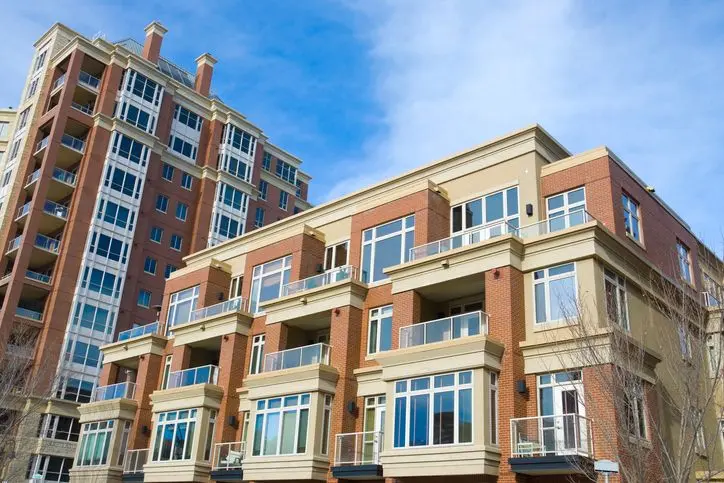
Multi-family commercial buildings in Alberta are income-producing assets valued on net operating income, not comparable sales, and that distinction shapes financing structures, tax treatment, and exit strategy across all price points. In communities like Airdrie, Cochrane, and Canmore, where population growth has structurally outpaced housing supply for years, understanding this asset class is the starting point for building a durable rental portfolio across both mid-range and luxury segments.
Multi-Family Commercial Buildings in Alberta Communities: Classification and the Five-Unit Threshold
In Canada, the five-unit threshold is the legal and financial dividing line between residential and commercial real estate. Properties with four or fewer units, duplexes, triplexes, fourplexes, qualify as residential and can be financed through conventional or insured residential mortgages. Once a building reaches five units or more, it is classified as commercial real estate regardless of whether every suite is purely residential in function.
That reclassification triggers different rules across four key dimensions:
-
Financing: Commercial lenders underwrite primarily on the property's income and debt service coverage, not the borrower's personal T4 alone.
-
Valuation: Appraisers apply the income approach, dividing net operating income (NOI) by a market capitalization rate, rather than comparing recent sales of similar homes.
-
Property taxes: Commercial assessments in Alberta municipalities typically carry a higher mill rate than residential assessments.
-
Zoning and land use: Municipal zoning distinguishes between low-density residential, medium-density residential, and commercial/mixed-use designations, each with distinct development and conversion rules.
CMHC formalizes this same boundary in its mortgage insurance programs: its flagship MLI Select program requires a minimum of five units to qualify.
How Multi-Family Commercial Buildings Are Valued
Multi-family commercial buildings are valued as businesses that generate income, not as properties compared to nearby sales. The core formula is:
Value = NOI ÷ Cap Rate
Net operating income equals gross rents collected minus vacancy allowance, property taxes, insurance, utilities, and management fees, but before debt service. The capitalization rate reflects what the market is willing to accept as an unlevered annual yield for that property type, location, and quality tier.
To make this concrete: a stabilized 12-unit building generating $180,000 in annual NOI in a market where comparable assets trade at a 5.5% cap rate implies a value of approximately $3.27 million. If the owner improves management efficiency and raises NOI to $200,000 without any physical changes, the same cap rate produces a value closer to $3.64 million, a gain of roughly $370,000 from operational improvements alone.
This income-based methodology means that value-add opportunities, properties with below-market rents, high vacancy, or deferred maintenance, carry genuine upside potential that does not exist in the single-family market. Poorly managed buildings can be significantly undervalued relative to their true income capacity, which is where experienced investors identify some of their best acquisitions across both the mid-range and luxury segments.
Alberta Cap Rates in Context
Alberta's multi-family cap rates are meaningfully higher than those in Ontario or British Columbia. Suburban multi-unit residential cap rates nationally averaged approximately 4.66%. Alberta's purpose-built rental assets in Edmonton have historically transacted in the 5.5%–7% range, and Calgary assets in the 4.5%–6% range, depending on building age, condition, location, and tenant mix (CMHC 2025 Rental Market Report and industry lending data). Canmore, as a resort-oriented community with a distinct demand profile, operates under its own supply dynamics and pricing logic.
Higher cap rates mean stronger current cash flow from day one, a meaningful advantage for investors who rely on the asset to service debt, fund reserves, and generate returns without depending on aggressive appreciation assumptions.
Alberta's Rental Market Fundamentals: Why the Province Stands Apart
Alberta offers multi-family investors a structural combination not fully replicated in any other major Canadian province: no provincial rent control, sustained net population growth, diversified demand drivers, above-average cap rates, and natural alignment with CMHC's affordability financing thresholds.
No Provincial Rent Control
Alberta has no rent control legislation. Landlords can adjust rents to market rate at lease renewal or vacancy, without the annual increase caps, typically 2%–3%, that constrain rental income growth in Ontario and British Columbia. Over a ten-year hold, that difference compounds substantially in terms of NOI growth, property valuation, and exit proceeds.
Sustained Population Growth
Alberta has led Canada in net interprovincial migration for twelve consecutive quarters as of early 2025, gaining approximately 28,000 net interprovincial migrants in 2024, according to Canada's annual population estimates. Alberta surpassed five million residents in the second quarter of 2025, reaching 5,029,346 as of July 1. In the third quarter of 2025, Alberta was the only province in Canada, alongside Nunavut, where the population grew, adding approximately 11,500 residents while Canada's overall population declined by more than 76,000 people, according to Statistics Canada's quarterly population estimates.
Cochrane and Airdrie have both benefited directly from Calgary's urban spillover, with Cochrane ranking among Canada's fastest-growing municipalities by percentage between 2016 and 2021 and Airdrie's absolute population growth placing it consistently among Canada's fastest-growing cities.
Demand That Outlasts the Cycle
CMHC's 2025 Rental Market Report (released December 2025) documented Calgary's purpose-built rental vacancy at 5.0% and Edmonton's at 3.8%, both reflecting a temporary market adjustment from record-high construction completions in 2024–2025, not a structural demand collapse. Calgary's rental stock grew by 11% in 2025, the fastest pace in decades, yet population-driven demand continued to absorb supply. Edmonton's average two-bedroom rent reached $1,603/month, up 3.5% year-over-year.
Nationally, the most affordable rental quartile maintained a vacancy rate of just 1.4% in 2025, even as overall vacancy climbed, a dynamic that directly benefits workforce housing investors throughout Alberta.
For investors in Airdrie, Cochrane, and Canmore, this provincial backdrop matters directly. These communities draw residents who work in Calgary or seek lifestyle factors, proximity to the mountains, lower density, community character, that Calgary proper cannot replicate. Their rental demand is structurally tied to provincial growth trends rather than to any single employer or sector. See a broader overview of commercial real estate conditions across Cochrane, Airdrie, and Canmore.
Financing Multi-Family Commercial Buildings in Alberta
Financing structure has an outsized effect on returns in commercial multi-family. The right product depends on the asset type, stage of development, and investor's capital strategy.
| Product | Max LTV / LTC | Max Amortization | Min DSCR | Recourse | Best For |
|---|---|---|---|---|---|
| MLI Select (New Construction) | Up to 95% LTC (all point tiers) | 40 yrs (50 pts) / 45 yrs (70 pts) / 50 yrs (100 pts) | 1.10× | Recourse at 50–70 pts; Limited-Recourse at 100 pts | New purpose-built rental development |
| MLI Select (Existing) | Up to 85% LTV (50 pts); up to 95% LTV (70+ pts) | 40 yrs (50 pts) / 45 yrs (70 pts) / 50 yrs (100 pts) | 1.10× | Recourse at 50–70 pts; Limited-Recourse at 100 pts | Value-add acquisitions with affordability / efficiency commitments |
| MLI Standard | Up to 85% LTV | Up to 40 years | 1.20× | Recourse | Stabilized acquisitions, no point requirements |
| Conventional Commercial | 70%–80% LTV | 25–35 years | 1.25×+ | Full recourse | Faster closings, greater flexibility |
CMHC MLI Select uses a points-based scoring system, affordability, energy efficiency, and accessibility commitments earn points that unlock better financing terms. For existing buildings, the 50-point minimum tier unlocks up to 85% LTV with 40-year amortization; the 70-point tier extends LTV to 95% and amortization to 45 years; the 100-point top tier provides 50-year amortization and limited-recourse structure.
For new construction, 95% loan-to-cost is available at all point tiers, with amortization extending from 40 to 50 years as points increase. Alberta's market rents tend to align naturally with CMHC's affordability scoring thresholds, making it easier for Alberta projects to accumulate the points required for higher tiers than in higher-cost coastal markets.
Understanding DSCR: The Lender's Core Metric
The debt service coverage ratio is central to every product in the table above:
DSCR = Annual NOI ÷ Annual Debt Service
A building generating $240,000 in NOI with $185,000 in annual mortgage payments carries a DSCR of approximately 1.30×, which most lenders find acceptable. MLI Select permits a minimum DSCR of 1.10×, making it uniquely accessible for projects with thinner operating margins, a threshold that determines not just approval, but maximum loan size and equity required.
By 2024, CMHC's construction financing programs supported an estimated 88% of all new purpose-built rental apartment starts in Canada, according to CMHC's 2025 Mid-Year Rental Market Update, Edmonton and Calgary recorded among the highest volumes of CMHC-insured new units in the country that year. Full program details are published on the CMHC MLI Select program page.
MLI Standard covers acquisitions of stabilized existing buildings with less program complexity, no points accumulation required. Conventional commercial financing closes faster and offers more structural flexibility, but at lower leverage and generally higher cost of capital.
Airdrie, Cochrane, and Canmore: Local Market Context for Multi-Family Investors
While Alberta's provincial fundamentals apply broadly, each of these three communities presents a distinct investment profile for multi-family commercial buildings.
Airdrie is one of Canada's fastest-growing cities by absolute population, driven by Calgary employment and relative affordability. In December 2025, Airdrie City Council enacted Bylaw B-30/2025, establishing a Multi-Unit Incentive Pilot Program that streamlines development permit approvals for qualifying multi-unit projects, at least five storeys for multi-residential uses and at least four storeys for mixed-use developments, in the M2 (Community Mixed Use), M3 (Downtown Core Mixed Use), R4 (Mid-Rise Multifamily Residential), and R5 (High Density Residential) districts. The program targets at least 300 new multi-unit homes over a two-year pilot (2026–2027), signalling active municipal support for rental intensification. For workforce-housing investors, this regulatory environment reduces approval uncertainty and aligns with strong underlying demand from Airdrie's labour force.
Cochrane draws a similar demographic, Calgary commuters and families seeking lower density and community character at a lower cost than Calgary proper. The town's Land Use Bylaw review, underway in 2025, is modernizing residential district regulations to better accommodate current housing needs, and federal initiatives have identified Cochrane as a site for purpose-built residential redevelopment on surplus government land, a signal of broader interest in expanding the community's rental supply.
Canmore operates on fundamentally different supply and demand dynamics. The 2021 federal census recorded that 26% of all private dwellings in Canmore were not occupied by their owners as primary residences, according to Statistics Canada, a structural feature of the resort market that constrains effective rental supply relative to the total housing stock. Strict development controls, protected mountain terrain, and a finite developable land base create genuine scarcity that does not exist in Calgary's suburban growth corridors. This scarcity supports pricing resilience in both the mid-range condo-rental segment and the luxury tier. Canmore's luxury multi-family segment responds to resort lifestyle demand, proximity to Banff National Park, and buyers seeking recreational and retirement investment, a demand base largely insulated from Calgary employment cycles.
Entry-Level vs. Luxury Multi-Family: Two Distinct Investment Theses
Alberta's multi-family market is not monolithic, and the investment case differs meaningfully between price points.
| Factor | Workforce / Mid-Range (Airdrie, Cochrane) | Luxury / Resort (Canmore) |
|---|---|---|
| Primary tenant driver | Calgary employment, affordability migration | Resort lifestyle, Banff proximity, retirement buyers |
| Vacancy pattern | Structurally tight; affordable quartile nationally at 1.4% vacancy (CMHC 2025) | Higher sensitivity to new luxury supply; Calgary's top-quartile at 6.7% (CMHC 2025) |
| Supply constraint | Municipal growth management; land availability moderate | Protected terrain, strict development controls, finite land base |
| Rent control exposure | None (Alberta) | None (Alberta) |
| Typical cap rate range | Mid-to-upper end of Alberta range (supply available) | Compressed by scarcity; warrants separate appraisal |
| Financing fit | MLI Select well-suited; affordability thresholds often achievable | Conventional or MLI Standard more typical; luxury rents may exceed MLI affordability thresholds |
Mid-range and workforce housing, older buildings with rents in the lower-to-middle quartile, consistently exhibits the lowest vacancy and the most durable tenant demand. In Alberta, where no rent control restricts income growth, these buildings offer occupancy stability combined with the freedom to adjust rents as the market allows.
Luxury and upper-tier multi-family carry different risk and reward characteristics. In Canmore specifically, supply scarcity and a non-primary-resident ownership base of 26% create genuine pricing support that is structurally different from new luxury construction in Calgary's suburban corridors. Both segments can generate strong risk-adjusted returns; matching the investment thesis, financing structure, and hold strategy to the specific asset and community is the differentiating factor.
Key Due Diligence Considerations for Multi-Family Commercial Buildings in Alberta
Investors should evaluate six core areas before committing capital to any multi-family commercial building in Alberta's communities.
-
Income verification: Obtain certified rent rolls and at least 24 months of operating statements. Compare in-place rents to current market rents, a significant gap, in either direction, has direct implications for near-term cash flow and valuation.
-
Vacancy and tenant quality: Review lease terms, tenure lengths, and arrears history. Buildings with long-tenured tenants at below-market rents may represent value-add upside; buildings with high turnover require scrutiny of underlying causes.
-
Capital expenditure: Commission a professional property condition assessment before firming any offer. Deferred maintenance on roofing, mechanical systems, and building envelope can consume years of NOI if not priced into the acquisition cost.
-
Zoning and municipal regulations: Confirm current zoning, permitted uses, and whether any rezoning or development potential exists that affects land value. In Airdrie, the 2026–2027 Multi-Unit Incentive Pilot creates a defined pathway for qualifying mid-rise and high-density development approval; in Cochrane, the ongoing Land Use Bylaw review is reshaping what is permissible in residential intensification districts.
-
Environmental: Phase I Environmental Site Assessments are standard for commercial transactions; Phase II may be warranted depending on property history and site conditions.
-
Canmore-specific regulatory layer: Confirm compliance with Canmore's vacation rental permit requirements and any tourist home tax obligations if the property has short-term rental history, as the town has actively tightened oversight of short-stay accommodation in residential zones.
Next Steps for Multi-Family Investors in Alberta Communities
Multi-family commercial buildings across Airdrie, Cochrane, and Canmore each present a fundamentally different risk-return profile, shaped by local zoning policy, supply constraints, tenant demand, and the financing structures available. For mid-range workforce housing in Airdrie and Cochrane, the combination of Alberta's no-rent-control environment, CMHC financing accessibility, and active municipal support for rental intensification creates a compelling acquisition and development case. For luxury and resort-market assets in Canmore, structural scarcity and a resort-oriented demand base underpin a distinct investment thesis that warrants its own appraisal analysis and hold-period strategy. Understanding where a specific property sits across both the mid-range and luxury segments of multi-family commercial real estate in Cochrane, Airdrie, and Canmore is the foundation of any sound investment decision in these markets.
Frequently Asked Questions
-
Is a multi-family building with five or more units considered commercial real estate in Alberta?
Yes. In Alberta, as in all Canadian provinces, any residential property with five or more units is classified as commercial real estate for financing, valuation, and regulatory purposes. Properties with four or fewer units are considered residential. This threshold determines which financing programs are available, how the property is appraised, and which commercial property tax rates apply.
-
How is a multi-family commercial building valued differently from a single-family home?
Single-family homes are valued primarily by comparing them to recent sales of similar properties. Commercial multi-family buildings are valued using the income approach: the property's net operating income is divided by a market capitalization rate to produce an estimated value. This means a building's value is directly tied to how much income it generates, and can increase substantially through improved occupancy, rent optimization, or expense reduction without any physical renovation.
-
What financing programs are available for multi-family commercial buildings in Alberta?
CMHC's MLI Select program offers the most capital-efficient terms for qualifying projects. For new construction, 95% loan-to-cost is available at all point tiers, with amortization ranging from 40 years (50-point minimum) to 50 years (100-point top tier) and limited-recourse structure at the highest tier. For existing building acquisitions, the 50-point tier unlocks up to 85% LTV with 40-year amortization; the 70-point tier extends LTV to 95% and amortization to 45 years. Alberta's market rents tend to align naturally with CMHC's affordability scoring thresholds, making it easier to reach higher point tiers. MLI Standard provides up to 85% LTV for stabilized acquisitions without point requirements. Conventional commercial lenders offer 70%–80% LTV with faster approval timelines. Full program details are published on the CMHC MLI Select program page.
-
Does Alberta's lack of rent control affect multi-family investment returns?
Significantly. Alberta has no provincial rent control legislation, meaning landlords can adjust rents to current market rates at lease renewal or vacancy without the annual increase caps that apply in Ontario and British Columbia. Over a ten-year hold, the compounding effect of unrestricted rent growth on NOI, and therefore on property value, is one of the primary structural advantages that Alberta multi-family offers relative to coastal markets.
-
What is a reasonable cap rate for a multi-family commercial building in Airdrie, Cochrane, or Canmore?
Cap rates vary considerably by community, building age, condition, and segment. Based on industry lending and market data through 2025–2026, purpose-built rental assets in Alberta's urban and suburban markets have generally traded in the 4.5%–7% range, with Edmonton at the higher end and Calgary's stronger-demand submarkets at the lower end (Altus Group Q4 2025; CMHC 2025 Rental Market Report). Canmore operates with a distinct supply-constrained dynamic and resort-market pricing logic that warrants a separate appraisal analysis. A professional commercial appraisal and current market comparables are essential for any specific property.
-
What makes Airdrie and Cochrane attractive for workforce-housing multi-family investment?
Both communities draw Calgary's labour force with lower land costs, lower density, and a community character that urban Calgary cannot replicate. Airdrie's 2026–2027 Multi-Unit Incentive Pilot Program actively streamlines approval for qualifying mid-rise and high-density rental projects in M2, M3, R4, and R5 districts, targeting 300 new multi-unit homes, a direct signal of municipal support for rental intensification. Cochrane's ongoing Land Use Bylaw review similarly reflects a municipality adapting its planning framework to accommodate residential intensification. Combined with Alberta's no-rent-control environment and CMHC financing accessibility, both communities present a compelling case for workforce-housing acquisition and development.
-
What short-term rental regulations apply to multi-family properties in Canmore, Alberta?
Canmore has actively tightened oversight of short-stay accommodation in residential zones. Any multi-family property with a history of short-term rental use requires a current vacation rental permit and may be subject to tourist home tax obligations. Investors acquiring properties in Canmore should confirm existing permit status and compliance history before closing, as non-compliant short-term rental arrangements can materially affect both income projections and permissible use going forward.
Categories
Recent Posts