Buying Land in Mountain View County, Alberta
Buying land in Mountain View County, Alberta puts you in one of the province's most active rural land markets. Alberta cultivated farmland values rose 11.4% in 2025, the largest single-year gain for the province since at least 2016, according to Farm Credit Canada's 2025 Farmland Values Report.
Mountain View County itself recorded an average land sale price of $7,290 per acre in 2025, prompting council to raise its own land acquisition benchmark to $7,200 per acre in January 2026. Understanding what drives those numbers, and what you need to verify before writing an offer, is the difference between a well-structured purchase and a costly surprise.
What Types of Land Are Available in Mountain View County AB
Mountain View County land falls into four broad categories, each carrying different financing conditions, zoning rules, and due-diligence requirements.
| Land Type | Typical Size | Primary Use | Key Considerations |
|---|---|---|---|
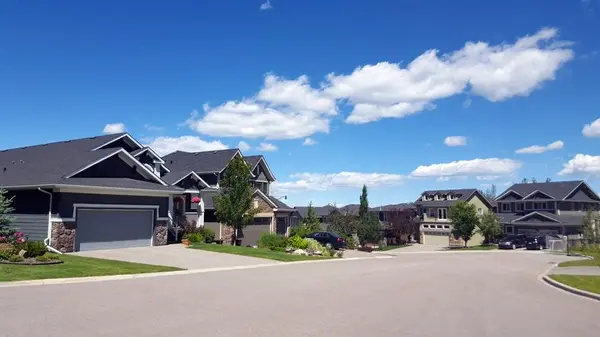
| Country residential parcels | 2–10 acres | Rural home, shop, horses | Subdivided lots; most relocating buyer demand from the nearest major urban centre lands here |
| Larger residential acreages | 10–80 acres | Hobby farming, additional outbuildings, privacy | Practical middle ground between country residential and a working farm |
| Agricultural quarter sections | ~160 acres | Cultivated cropland, pasture, mixed use | Different financing, taxation, and bylaw-permitted uses than residential acreages |
| Bare land | Varies | Development, investment | Buyer carries full cost of well, septic, electrical connection, and road access |
Country residential parcels suit buyers looking for a comfortable home, shop space, and room for horses without committing to a working farm. Larger residential acreages offer genuine usable space for hobby farming or additional outbuildings.
Agricultural quarter sections require lenders experienced in agricultural transactions, as financing and tax treatment differ meaningfully from residential parcels. Bare land is priced lower up front, but the buyer carries the full cost and timeline of bringing in services. Factor those infrastructure costs into your total budget before comparing bare land to improved parcels.
Why Mountain View County Attracts Rural Land Buyers
Mountain View County draws land buyers for three reasons: per-acre pricing that remains below counties closer to major urban centres, terrain diversity ranging from open prairie cropland to rolling foothills, and an agricultural support network built over more than a century of active farming that lowers startup costs for working operations.
The county runs northwest from central Alberta toward the foothills, sitting roughly 45 to 90 minutes from the nearest major city depending on where in the county the property is located. That positioning places it beyond the commuter premium zone of immediately adjacent counties while keeping urban services within reach.
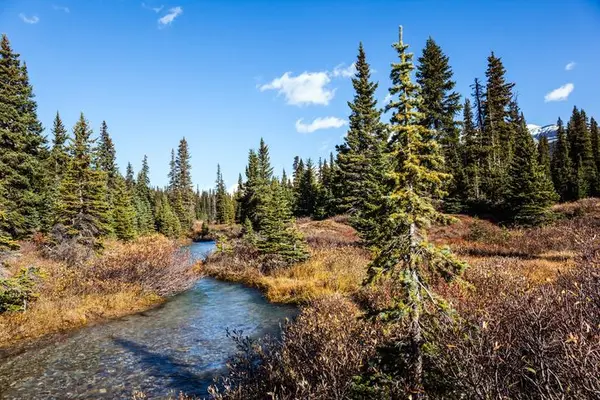
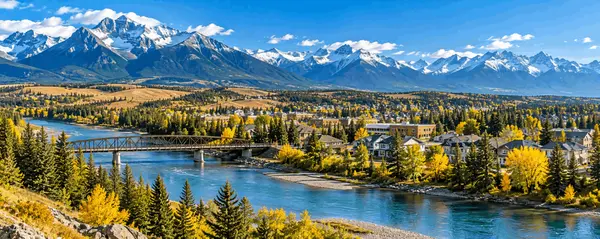
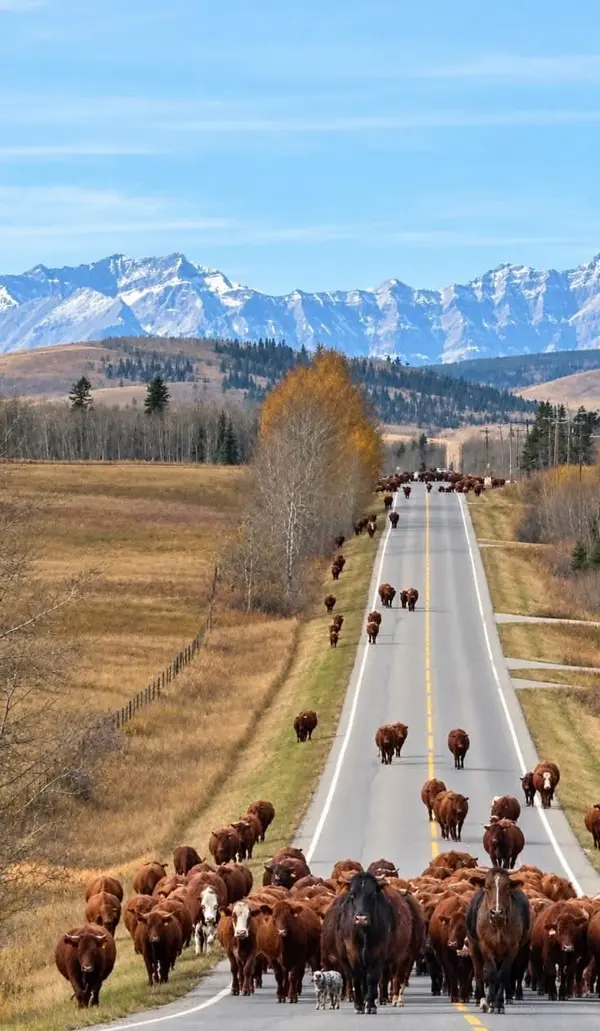
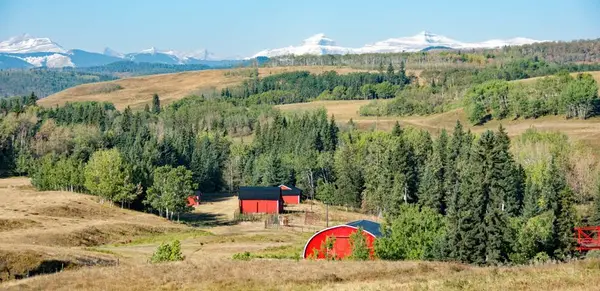
The county's terrain divides broadly between east and west. Eastern areas are open prairie and cropland, with wider temperature swings and better suitability for grain production. Western areas near Sundre and Cremona transition into rolling foothills with more tree cover, higher precipitation, and views of the Rockies on clear days. The terrain difference matters for intended use: buyers planning pasture or grain operations and buyers seeking a treed acreage lifestyle are often looking at different parts of the county.
Established towns throughout the county provide schools, healthcare, grocery, and trades services within a reasonable drive of most rural properties:
Olds stands out for its agricultural college, hospital, and fibre-to-premises broadband infrastructure that supports remote work at speeds comparable to urban areas.
Didsbury sits along Highway 2 with direct highway access to major centres, making it practical for buyers maintaining employment while transitioning to rural life.
Sundre sits at the foothills edge of the county with access to the Red Deer River and surrounding recreational land.
Crossfield anchors the southern end of the county with proximity to major highway corridors.
Equipment dealers, large-animal veterinary services, feed suppliers, and seed companies operate here because sustained demand supports them. For buyers planning livestock or crop operations, that existing rural Alberta land services network matters.
Mountain View County Land Use Bylaw: What Buyers Need to Know
The governing framework for any rural land purchase in Mountain View County is Mountain View County Land Use Bylaw No. 10/24, supported by the Municipal Development Plan under Bylaw No. 20/20. Every parcel in the county carries a land use district designation, and that designation controls what you can do with the property: whether you can subdivide it, operate a home-based business, build additional structures, run a commercial livestock operation, or add a guest dwelling.
Country residential and agricultural districts have different rules. A plan that works on an agricultural parcel may not be permitted on a country residential lot, and vice versa. The county has seen active redesignation applications in recent years, with conversions between Agricultural District, Country Residential, Residential Farmstead, and other designations ongoing into 2025 and 2026. That activity reflects genuine demand pressure on the land base.
Before writing an offer on any parcel, confirm the land use district directly with Mountain View County's Planning and Development Services. Many country residential subdivisions also carry private restrictive covenants registered on title, covering minimum home sizes, building materials, livestock restrictions, or prohibitions on certain structures. These covenants are separate from county zoning and are privately enforceable. Read them before proceeding.
For buyers considering bare land, a pre-application meeting with Mountain View County planning staff is a sensible first step. It costs nothing and clarifies whether your intended use aligns with the parcel's designation before you invest further time and money.
Land Pricing in Mountain View County AB
Mountain View County acreage and farmland pricing covers a wide range depending on parcel type, location, and existing infrastructure. Data presented to county council in January 2026 by the county's assessment services department, and reported by The Albertan following the January 14, 2026 council meeting, recorded an average land sale price of $7,290 per acre and a median of $6,673 per acre for 2025. That average represented a $1,354 per acre increase over 2024 and prompted council to raise the county's own land acquisition rate from $5,900 to $7,200 per acre.
At the provincial level, Farm Credit Canada's 2025 Farmland Values Report, published March 24, 2026, recorded Alberta cultivated farmland values rising 11.4% in 2025, the largest single-year gain for the province since at least 2016. The national average was 9.3%, with Manitoba (12.2%) and Alberta leading among the prairie provinces.
Pricing across specific parcel types varies considerably beyond the per-acre average. Improved acreages near towns with existing homes and services trade at meaningfully different values than bare agricultural quarter sections or remote unserviced parcels. Geographic location within the county also matters: parcels near Didsbury carry a premium for highway access; Olds properties command higher values for their infrastructure; Sundre-area parcels are priced lower per acre but involve longer drives for routine services.
The Mountain View Region reported a total residential benchmark price of $515,600 as of July 2025, with a sales-to-new-listings ratio of approximately 69%, indicating a seller-leaning market with relatively tight inventory at that time. These figures reflect residential property transactions and do not directly represent bare land or agricultural quarter section pricing, which is addressed in the per-acre data above.
Due Diligence Checklist for Land in Mountain View County
Purchasing rural land in Mountain View County involves a longer verification list than a typical residential transaction. The table below covers the items that matter most.
| Checklist Item | What to Confirm |
|---|---|
| Water supply | Obtain the well log (depth, flow rate in gallons per minute, drill date); condition your offer on a current potability test covering coliform bacteria, nitrates, and hardness. Cisterns require confirming delivery volume and ongoing operating costs. |
| Road access | Determine whether access is paved highway, county-maintained gravel, or a private track. Winter drivability, school bus routing, insurance costs, and lender acceptance all depend on road type. |
| Heating and utilities | Confirm whether natural gas reaches the parcel or whether the property relies on propane, wood, or electric heat. Propane operating costs should be modeled into your budget before comparing properties. |
| Internet connectivity | Verify what broadband service is available at the specific address, not just the postal code. Most rural addresses in the county rely on Starlink, fixed wireless, or line-of-sight providers. |
| Zoning and restrictive covenants | Confirm the land use district with Mountain View County and check title for any registered covenants before committing to a use that may not be permitted. |
| Taxation and agricultural assessment | Larger parcels with active agricultural use may qualify for agricultural assessment, which is lower than residential. If the land is leased to a neighbour for hay or grazing, confirm how that arrangement affects your tax treatment. |
| Financing | Most residential lenders mortgage the home and the immediately surrounding land, generally 5 to 10 acres. Larger parcels may require a separate agricultural lending product. Arrive at the offer stage pre-approved through a lender experienced in rural transactions. |
| Insurance | Wood stoves, oil tanks, distance to the nearest fire hall, and the property's water source for firefighting all affect premium costs and, in some cases, coverage availability. Get an insurance quote before going unconditional. |
The Rural Property Transaction: How It Differs
Rural land transactions in Mountain View County run differently from urban residential sales in several ways buyers should anticipate.
Market velocity is slower. Properties are larger, buyers are fewer, and many come from outside the area. Acreages typically take longer to sell than in-town homes. That slower pace benefits buyers during the evaluation period, giving time to complete water testing, review zoning documents, and obtain rural lender pre-approval without feeling pressured by a competing offer.
Possession logistics require planning ahead of closing day. Key steps to coordinate include:
- Arranging an initial propane fill if the property uses propane heat
- Scheduling well shocking and a potability test before move-in
- Having the septic system pumped and inspected
- Confirming utility account transfers and service start dates
Rural land in Mountain View County also brings operational responsibilities that do not exist in town. Budget for these whether you handle them personally or contract them out:
- Private road and driveway maintenance
- Well and water system upkeep
- Snow clearing on your own property
- Livestock or crop management, if agricultural use is part of the plan
These are known costs, not surprises, if you account for them in advance.
Buyers ready to explore available parcels can browse land for sale in Mountain View County, which includes current active properties across Cremona, Crossfield, Didsbury, Olds, and Sundre.
If you need more help and information, let's talk! Call +1(403) 969-6991, send an email to mcmillanrealestategroup@gmail.com, or send us a message through McMillan Real Estate Group contact page.
FAQ: Buying Land in Mountain View County AB
How much does land cost per acre in Mountain View County?
Mountain View County recorded an average land sale price of $7,290 per acre and a median of $6,673 per acre for 2025, based on data presented to county council in January 2026 by the county's assessment services department. Those figures cover raw land transactions used to set the county's road construction acquisition rate and reflect general market conditions rather than improved acreage prices, which vary considerably based on parcel size, location, and existing infrastructure.
What is the current land use bylaw in Mountain View County?
The governing document is Mountain View County Land Use Bylaw No. 10/24, supported by the Municipal Development Plan under Bylaw No. 20/20. The bylaw assigns each parcel a land use district that determines permitted uses, building rights, subdivision rules, and livestock allowances. Redesignation applications have been active through 2025 and 2026. Always verify the current designation directly with Mountain View County Planning and Development Services before purchasing.
Can you build a home on bare land in Mountain View County?
It depends on the parcel's land use district. Agricultural parcels and country residential parcels have different rules for what can be built, how many dwellings are permitted, and what commercial or home-based business uses are allowed. A pre-application meeting with Mountain View County planning staff is a no-cost way to confirm whether your intended use aligns with the parcel before committing to a purchase.
Do I need special financing to buy a rural acreage or quarter section in Mountain View County?
For parcels beyond roughly 5 to 10 acres, conventional residential lenders typically only mortgage the home and the immediately surrounding land. The additional acreage may require a separate agricultural lending product. Working through a basic budget estimate before approaching a lender helps clarify the financing gap between the home portion and any additional acreage. A lender experienced specifically in rural and acreage transactions will ensure your pre-approval reflects the full property you are buying.
Are Alberta farmland values still rising?
According to Farm Credit Canada's 2025 Farmland Values Report, published March 24, 2026, Alberta cultivated farmland values rose 11.4% in 2025, the largest single-year gain for the province since at least 2016. The national average was 9.3%. FCC noted that demand remained robust despite trade uncertainty, higher input costs, and softer commodity prices, supported by limited supply and long-term confidence in Canadian agriculture.
Can you keep livestock on land in Mountain View County?
Most agricultural and country residential parcels in Mountain View County permit horses, cattle, and other livestock under the county's agricultural zoning. Specific allowances depend on the parcel's land use district, size, and any registered covenants on title. Confirm livestock permissions directly with Mountain View County's Land Use Bylaw before purchasing if agricultural use is central to your plans.
How long does it take to close on rural land in Mountain View County?
Rural land transactions typically take longer to close than in-town residential sales. Extended condition periods are common, since water testing, zoning verification, septic inspection, and rural lender pre-approval each require lead time. Buyers should factor a condition period of three to four weeks into their offer timeline and confirm all due diligence items before going unconditional.
Thinking of buying or selling?
Get your free home value | Get new listings sent to you first
Questions? Call or text Adam McMillan, Associate Broker with Real Broker, at 403-969-6991.
Categories
Recent Posts